
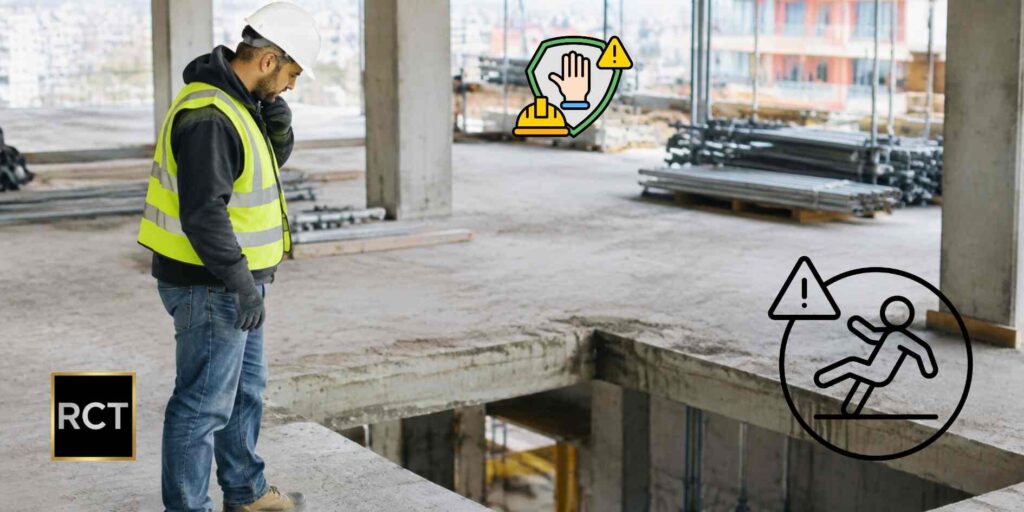
Getting hurt at work does not always mean your employer is the only party involved. Think about a construction worker who falls because another contractor left an opening uncovered. Or a delivery driver struck by a negligent motorist while making a scheduled stop. An equipment operator could also suffer serious injuries when a machine breaks apart during normal use.
In each situation, workers’ compensation may cover medical treatment and part of the employee’s lost income. But what happens when someone outside the employment relationship helped cause the accident? Does accepting workers’ compensation mean giving up the right to hold that other party responsible?
No. In Florida, an injured worker may be able to receive workers’ compensation benefits and pursue a separate personal injury claim against a negligent third party. Florida Statute §440.39 expressly allows both remedies in qualifying cases.
This distinction matters in Coral Springs and throughout Broward County, particularly when an accident involves a construction site, commercial property, outside maintenance company, or equipment manufacturer.
Can you sue a third party after a workplace accident in Florida?
Yes. Florida law allows an injured employee to pursue a personal injury claim against a third party whose negligence or wrongful conduct caused the workplace injury.
The key provision is Florida Statute §440.39. Under this law, an employee can accept workers’ compensation benefits while also pursuing a separate action against the responsible third party.
Third-party liability after a workplace injury
Consider a construction worker injured when a subcontractor’s equipment malfunctions. The worker’s employer may be responsible for providing workers’ compensation coverage. However, the company that manufactured the defective equipment could face a separate product liability claim.
Why? Because these claims serve different purposes. Workers’ compensation provides benefits under Florida’s statutory system. A third-party lawsuit, on the other hand, seeks damages from someone whose negligence or other legally actionable conduct caused the injury.
There is one important limitation: the third party must actually be legally responsible. Simply being present at the workplace, or having a business relationship with the employer, does not automatically make a company liable for an accident.
What is the difference between workers’ compensation and a personal injury lawsuit?
Workers’ compensation is generally a no-fault system. In other words, an employee does not ordinarily have to prove that the employer caused the accident through negligence to qualify for benefits. The injury must still meet the statutory requirements, including arising out of work performed in the course and scope of employment.
Under Florida Statute §440.09, the injury and its occupational cause must be established to a reasonable degree of medical certainty through objective relevant medical findings.
Workers’ compensation benefits versus personal injury damages
A personal injury claim works differently. Here, the injured person generally must establish that another party owed a legal duty, breached that duty, and caused the injury. The claim may also seek damages that workers’ compensation does not provide.
| Workers’ compensation | Third-party personal injury claim |
| Generally does not require proof of employer negligence | Usually requires proof of negligence or another legal basis for liability |
| Covers qualifying medical treatment | May include medical expenses as part of damages |
| Provides statutory disability and impairment benefits | May include lost earning capacity and other legally recoverable damages |
| Does not provide ordinary pain and suffering damages | May allow compensation for pain and suffering |
| Generally involves the employer’s workers’ compensation carrier | Involves the legally responsible outside party and applicable insurance |
Can you collect workers’ comp and sue another company?
Yes, and this is one of the most important distinctions to understand. Receiving workers’ compensation does not automatically prevent a third-party lawsuit. However, the relationship between the two claims needs careful attention.
Under §440.39, an employer or workers’ compensation insurer may have a right to recover certain benefits paid from a third-party settlement or judgment. This is commonly called a workers’ compensation lien or subrogation interest. The statute also explains how attorney fees and litigation expenses affect that recovery.
So, does the injured worker simply keep the entire third-party settlement on top of the benefits already received? Not necessarily. The applicable lien and statutory calculations must be considered before resolving the claim.
Who can be responsible for a workplace accident besides your employer?
The answer depends on who controlled the dangerous condition or activity that caused the injury. And because modern workplaces often involve several companies, the responsible party may not be immediately obvious.
Another contractor or subcontractor
Construction sites are a good example. Several companies may work in the same area, sometimes at the same time. One crew installs electrical systems while another handles flooring or plumbing. Consequently, a worker employed by one company may be injured because another contractor left a dangerous condition behind.
Imagine a subcontractor cutting an opening in a floor to install equipment but failing to secure it properly. Later, an employee of another company walks through the area and falls.
The injured worker may have a claim against the company responsible for creating or leaving the hazard. However, Florida has special workers’ compensation immunity rules for certain contractors and subcontractors. Therefore, the fact that two companies work on the same construction project does not, by itself, settle whether one can be sued by the other’s employee.
A property owner or property manager
A workplace accident may also occur on property owned or managed by someone other than the injured person’s employer.
Suppose a maintenance worker is sent to repair equipment at an apartment complex. The property manager knows about a dangerous floor condition but fails to address it or provide an adequate warning. The worker slips and suffers a serious injury.
Could the property owner or manager be responsible? Potentially, yes. The answer depends on the circumstances and the owner’s legal responsibilities.
Florida courts have recognized that property owners may sometimes be responsible for injuries to independent contractors’ employees. However, the analysis can change when the owner actively participates in the work or exercises direct control over how it is performed. A concealed danger known to the owner may also matter.
In Fuentes v. Sandel, Inc., the Third District discussed these exceptions to the general rule governing property owners and independent contractors. The decision illustrates why the owner’s actual involvement in the work can matter more than simply owning the property.
A negligent driver
Work-related driving creates another category of potential third-party claims. After all, not every workplace accident happens inside a building or on a construction site.
A delivery driver, salesperson, construction worker, or employee traveling between job sites may be injured in a collision caused by another motorist. Even though the trip was work-related, the injured employee may still pursue a claim against the negligent driver.
The worker may qualify for workers’ compensation while also pursuing the driver’s auto insurance coverage or another applicable liability claim.
Florida’s 2024 workplace fatality data makes this category particularly significant. According to the U.S. Bureau of Labor Statistics, Florida recorded 284 fatal work injuries that year. Transportation incidents accounted for 109 of those deaths, or 38% of the state total.
That figure includes work-related transportation incidents, not simply collisions involving employees driving company vehicles. Even so, it shows how frequently transportation hazards contribute to fatal workplace injuries.
A manufacturer of defective equipment
An employee injured by a defective machine, power tool, vehicle component, or other piece of equipment may have a product liability claim against a manufacturer or another responsible party in the distribution chain.
For example, imagine a worker operating an industrial cutting machine when its safety guard suddenly detaches. If the guard was defectively designed or manufactured, the company responsible for the product may face a separate claim.
The same principle applies to a forklift with defective brakes or a lifting device that fails because of a dangerous component. In these situations, the investigation may need to examine the product itself, rather than focusing exclusively on what the employer did.
A product liability claim does not depend on proving that the employer was negligent. Instead, it focuses on whether the product was defective and whether that defect caused the injury.
Can you sue another subcontractor after a construction accident in Florida?
Sometimes, but Florida’s horizontal workers’ compensation immunity rules can make these cases complicated. This is particularly relevant on construction projects where several contractors and subcontractors share responsibility for different parts of the job.
Florida’s construction site workers’ compensation immunity rules
Under Florida Statute §440.10(1)(e), a subcontractor working with a contractor on the same project may receive immunity from certain lawsuits brought by employees of another subcontractor.
That protection comes with statutory conditions. The subcontractor must have secured workers’ compensation insurance for its employees, or the contractor must have secured coverage on its behalf. Additionally, the subcontractor’s own gross negligence cannot have been the major contributing cause of the injury.
This is why identifying the companies involved is only the beginning. Their contracts and insurance arrangements may determine whether a third-party claim can proceed.
A recent Florida case shows why the contracts matter
In Teed v. Everest Campus East, LLC, decided on April 8, 2026, a worker was injured while servicing a swimming pool at an apartment complex.
The worker received workers’ compensation benefits through his employer, Bay Guard Pool Services. He then sued Everest, the property’s management company, alleging that it had failed to maintain the premises safely and warn him about a dangerous condition.
Everest argued that it was protected by horizontal workers’ compensation immunity because it was working on the same project as Bay Guard. The trial court agreed.
However, the Second District Court of Appeal reversed. The court found that the property owner had not undertaken a primary contractual obligation to a third party that it then subcontracted to Everest or Bay Guard. As a result, the companies did not fit the statutory contractor and subcontractor relationship required for that immunity.
Why does this matter? Because two companies can work at the same property without automatically becoming subcontractors under §440.10(1)(e).
Teed is a Second District decision, not a Fourth District ruling for Broward County. Nevertheless, it is a recent Florida appellate decision that provides a useful example of how courts examine the actual contractual relationships behind a workplace injury.
What if the employer caused the workplace accident?
This is where Florida’s workers’ compensation exclusivity rule becomes important. Although an employee may have a third-party claim in certain circumstances, suing the employer directly is a different matter.
Under Florida Statute §440.11, workers’ compensation is generally the employee’s exclusive remedy against an employer that has secured the required coverage.
In practical terms, an employee ordinarily cannot sue their employer for negligence simply because the employer failed to maintain a safe workplace. The workers’ compensation system generally replaces that type of negligence lawsuit.
When can you sue an employer for a workplace injury?
There are limited statutory exceptions. For example, if an employer fails to secure the required coverage, §440.11(1)(a) allows an injured employee to elect between claiming workers’ compensation benefits and maintaining an action for damages.
The absence of required coverage can therefore change the legal options available to an injured worker.
Employer intentional tort claims in Florida
Florida also recognizes a narrow exception for intentional workplace injuries.
Under §440.11(1)(b), an employee must prove by clear and convincing evidence that the employer deliberately intended to cause the injury, or that the employer engaged in conduct it knew was virtually certain to cause injury or death.
The second route has demanding requirements. It involves prior similar accidents or explicit warnings about a known danger. The employer must also have deliberately concealed or misrepresented that danger so the employee could not make an informed decision about performing the work.
Ordinary carelessness does not meet this standard. For instance, a poorly maintained machine or an ignored safety complaint may be evidence worth investigating. However, neither automatically establishes an intentional tort.
What if the worker was called an independent contractor?
The label on a contract or pay stub does not necessarily settle someone’s employment status under Florida workers’ compensation law. This distinction can have serious consequences, especially when an injured worker has been told that they are responsible for their own insurance.
Independent contractor classification in Florida
The distinction is particularly important in construction. Florida applies specific rules when determining whether someone qualifies as an employee or an independent contractor for workers’ compensation purposes.
The Florida Department of Financial Services explains that construction industry workers are subject to different classification rules from workers in other industries. In nonconstruction industries, the statutory independent contractor criteria include factors such as maintaining a separate business and providing services through an independent business arrangement.
So, can a company avoid its workers’ compensation obligations simply by calling everyone who works for it a contractor? Not necessarily.
The actual working arrangement matters. So does the nature of the work being performed.
How long do you have to report a workplace accident in Florida?
An injured worker generally must notify the employer within 30 days after the accident or the initial manifestation of the injury.
Florida’s 30-day workplace injury reporting requirement
This requirement appears in Florida Statute §440.185. The law recognizes certain exceptions, including situations where the employer already had actual knowledge of the injury or where the occupational cause could not reasonably be identified until a medical opinion became available.
The Florida Department of Financial Services advises employees to report an injury as soon as possible. After all, waiting until the last day can create unnecessary problems.
There is also a separate reporting obligation for the employer. Once it has knowledge of the injury, the employer generally must report it to its workers’ compensation insurance carrier within seven days.
An injured worker should keep a record of when and how the accident was reported. Written notice can help establish that the employer received the information.
How long do you have to file a third-party workplace injury lawsuit?
A third-party personal injury claim has its own filing deadline. Florida generally provides two years for negligence actions under §95.11(5)(a), subject to applicable exceptions and other rules. Workers’ compensation claims have separate deadlines under Chapter 440.
These deadlines should not be confused. Reporting an accident to an employer does not automatically preserve every possible legal claim.
What evidence matters after a workplace accident?
A workplace injury investigation may involve several companies and different insurance policies. Consequently, the evidence should help establish who controlled the dangerous condition and how the accident happened.
Evidence used to prove third-party workplace liability
Depending on the incident, useful evidence may include:
- Incident reports: The employer’s report may identify the time, location, people involved, and initial explanation of the accident.
- Photographs and video: Security footage or photographs
Contact Us
Coral Springs Office
9625 W. Sample Rd
Coral Springs, FL 33065
Tel: 954-866-HURT
(954-866-4878)
Fax: 954-334-1526