
If you were injured in a bus accident in Florida, you may be entitled to compensation for medical expenses, lost income, pain and suffering, and other losses. Bus accident claims can involve private transportation companies, public transit systems, school districts, charter operators, other drivers, and vehicle manufacturers.
Reinfeld Cabrera Tison represents people injured in bus accidents throughout South Florida, with offices in Coral Springs and Fort Lauderdale. Our attorneys handle personal injury claims involving public transit buses, school buses, charter buses, commercial buses, shuttle buses, and other passenger vehicles.
Bus accident cases can involve questions about driver conduct, vehicle maintenance, insurance coverage, government liability, and applicable federal and Florida regulations. We investigate the circumstances of the accident and work to determine who may be legally responsible for your injuries.
Key Takeaways: Florida Bus Accident Claims
- Several parties may be responsible: Depending on how the accident occurred, potential defendants can include bus drivers, private bus companies, transit authorities, school districts, maintenance providers, manufacturers, and other motorists.
- Public and private bus claims are different: An injury involving a government-operated transit system can involve Florida’s sovereign-immunity laws and specific notice requirements that do not apply in the same way to a private bus company.
- Federal regulations may apply: Certain commercial passenger carriers operating in interstate commerce are subject to federal requirements concerning driver qualifications, vehicle inspection, maintenance, hours of service, and other safety matters.
- The filing deadline depends on the claim: Florida generally provides a two-year limitations period for actions founded on negligence, while claims involving governmental entities can involve additional statutory requirements and different rules.
- Early investigation can be important: Bus surveillance footage, driver records, maintenance records, electronic data, witness statements, and other evidence may become important when establishing what caused an accident.
Types of Bus Accident Claims We Handle
Bus accidents do not all happen in the same way, and the legal issues can differ depending on the type of bus and the circumstances of the accident.
Public Transit Bus Accidents
Public transportation buses carry thousands of passengers throughout South Florida. Broward County Transit (BCT) operates fixed-route buses, express and community shuttles, and paratransit services throughout Broward County.
An injury involving a BCT bus or another government-operated transit system can raise issues that are different from an accident involving a privately owned bus. Florida’s sovereign-immunity statute provides a limited waiver for certain tort claims against governmental entities while imposing specific requirements and limitations.
School Bus Accidents
School bus accidents can injure students, drivers, pedestrians, bicyclists, and occupants of other vehicles. Depending on the circumstances, a claim may involve a school district, bus operator, driver, maintenance provider, another motorist, or another responsible party.
Charter Bus Accidents
Charter buses transport passengers for schools, businesses, tour groups, sporting events, private organizations, and other purposes. Claims may involve the charter company, driver, vehicle owner, maintenance provider, or another party.
Commercial Bus and Motorcoach Accidents
Certain commercial passenger carriers are subject to federal motor carrier safety regulations. Depending on the operation, federal rules can address driver qualifications, vehicle inspections, maintenance, hours of service, accident records, and other safety requirements.
Shuttle Bus Accidents
Hotel, airport, parking, medical, casino, residential, and other shuttle services can also be involved in passenger injury claims. Responsibility may depend on the shuttle operator, property owner, driver, vehicle owner, or another party.
Injuries Inside a Moving Bus
A bus accident does not always involve a collision.
Passengers can be injured when a bus suddenly brakes, accelerates, turns, changes lanes, or otherwise moves in a way that causes someone to fall or be thrown against part of the vehicle. Injuries can also occur while passengers are boarding or exiting a bus.
The circumstances of the incident determine whether another party may be legally responsible.
Common Causes of Bus Accidents in Florida
Bus accidents can result from many different factors. An investigation may be necessary to determine what happened and whether negligence contributed to the accident.
Driver Negligence
Unsafe lane changes, speeding, distracted driving, failure to yield, improper turns, following too closely, and other negligent driving can cause serious bus accidents.
Driver Fatigue
Fatigue can affect reaction time, attention, and decision-making. Certain commercial passenger carriers are subject to federal hours-of-service requirements, although the specific rules and exemptions depend on the type of operation.
Blind Spots and Unsafe Lane Changes
Large buses have substantial blind spots. Failing to check surrounding traffic before changing lanes, merging, or turning can cause collisions with cars, motorcycles, bicycles, and pedestrians.
Inadequate Driver Training or Qualification
Depending on the type of bus operation, applicable rules may impose requirements concerning driver qualifications, driving records, medical qualifications, testing, and driver qualification records.
Inadequate Vehicle Maintenance
Brake problems, worn tires, steering failures, defective lights, suspension problems, and other mechanical issues can contribute to an accident.
Defective Bus Parts
A defective component may create a separate legal issue involving a manufacturer, distributor, or another company in the supply chain.
Unsafe Bus Stops or Loading Areas
Passengers can be injured because of dangerous conditions around a bus stop, terminal, loading area, or other location where passengers enter or exit a bus.
Negligence by Another Driver
A bus passenger may be seriously injured because another motorist strikes the bus or causes the bus driver to take evasive action. The fact that a bus was involved does not automatically mean that the bus operator was responsible.
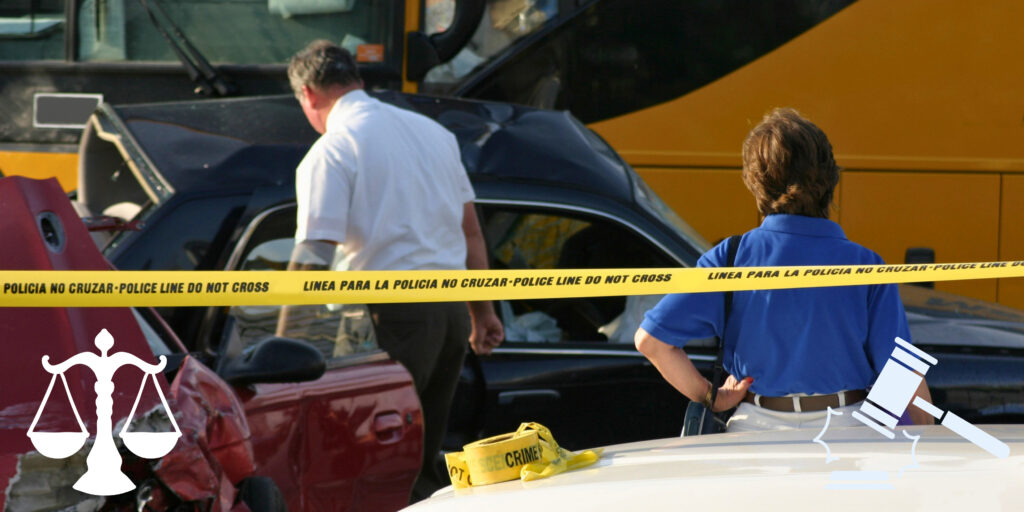
Who Can Be Liable for a Bus Accident?
The party responsible for a bus accident depends on the facts and evidence of the particular case.
Potentially responsible parties can include:
- Bus drivers
- Private bus companies
- Public transit authorities
- Counties and municipalities
- School districts
- Charter companies
- Bus owners
- Vehicle maintenance companies
- Vehicle or component manufacturers
- Other motorists
- Property owners or other third parties
More than one party can potentially share responsibility for an accident.
Determining liability may require examining the driver’s conduct, the condition of the bus, maintenance records, surveillance footage, accident reports, witness statements, electronic data, and other evidence.
How Is a Bus Accident Investigated?
A bus accident investigation can involve much more than reviewing the police accident report.
Depending on the circumstances, relevant evidence may include:
- Police and crash reports
- Bus surveillance-camera footage
- Dash-camera footage
- Traffic-camera footage
- Driver qualification records
- Driver logs and hours-of-service records where applicable
- Vehicle inspection records
- Maintenance and repair records
- GPS and telematics data
- Bus route and scheduling information
- Witness statements
- Photographs and video from the accident scene
- Medical records
- Cellphone or electronic evidence where legally relevant
- Evidence concerning the condition of the road, bus stop, or loading area
For certain interstate passenger carriers, federal regulations require accident records and impose requirements concerning driver qualifications and vehicle inspection, repair, and maintenance.
Preserving this evidence can be particularly important when a bus company, government entity, or insurance carrier controls information relevant to the accident.
What If I Was Injured on a Broward County Transit Bus?
Injuries involving Broward County Transit can present legal issues that are different from an accident involving a private transportation company.
BCT is operated by Broward County and provides fixed-route, express, community-shuttle, and paratransit services throughout the county.
Florida’s sovereign-immunity statute provides a limited waiver for certain tort claims against counties and other governmental entities. The statute also establishes specific notice requirements, limitations on governmental liability, and other procedural rules.
For example, the statute generally requires written presentation of a claim to the appropriate governmental agency within three years after the claim accrues, with different provisions for certain types of claims, including wrongful death. The statute also establishes separate rules governing when a civil action may be filed and the amount a governmental entity may be required to pay.
Because these requirements can affect a person’s ability to pursue a claim, anyone injured on a government-operated bus should seek legal advice promptly.
What Compensation Can I Recover After a Bus Accident?
Depending on the circumstances of the accident and the damages that can legally be established, a bus accident claim may seek compensation for:
- Emergency medical treatment
- Hospital and medical expenses
- Future medical care
- Physical therapy and rehabilitation
- Lost wages
- Loss of future earning capacity
- Physical pain and suffering
- Permanent impairment or disability
- Other legally recoverable damages
When a bus accident causes a death, eligible surviving family members may also have a wrongful death claim under Florida law.
The compensation available in a particular case depends on the injuries, losses, applicable law, and evidence establishing liability.
How Long Do I Have to File a Bus Accident Claim in Florida?
Florida’s statute of limitations depends on the type of legal claim.
Under Florida Statutes §95.11, an action founded on negligence generally must be commenced within two years. Other claims can be subject to different limitation periods.
Claims involving government entities can involve additional statutory requirements. Florida’s sovereign-immunity statute, for example, contains specific requirements concerning notice and the commencement of actions against state agencies and subdivisions.
Because missing an applicable deadline or failing to comply with a required notice procedure can affect your legal rights, it is important to discuss a bus accident with an attorney as soon as possible.
What Should I Do After a Bus Accident?
If you are injured in a bus accident, taking a few practical steps can help protect your health and preserve information about what happened.
- Seek medical attention. Some injuries may not become apparent immediately.
- Report the accident. Make sure the appropriate authorities and bus operator are notified.
- Document your injuries. Keep medical records, bills, prescriptions, and information about your treatment.
- Record the circumstances. If possible, write down the bus route, bus number, location, time, direction of travel, and what happened before and during the accident.
- Preserve photographs and video. Photograph your injuries, the accident location, the bus, surrounding vehicles, and other relevant conditions when it is safe to do so.
- Identify witnesses. Obtain contact information from people who saw the accident when possible.
- Keep records of lost income. Document time missed from work and other financial losses.
- Be cautious with insurance companies. Consider obtaining legal advice before providing a recorded statement or signing documents relating to your claim.
- Contact an attorney promptly. This can be particularly important when a government entity operates the bus or may control evidence relevant to the accident.
Why Choose Reinfeld Cabrera Tison?
Bus accident claims can involve serious injuries, multiple potentially responsible parties, insurance companies, government entities, and evidence that may need to be preserved quickly.
At Reinfeld Cabrera Tison, our personal injury attorneys investigate the circumstances surrounding bus accidents, evaluate the available evidence, identify potentially responsible parties, and pursue compensation for injured clients and eligible family members.
Investigating the Cause of the Accident
We examine the available evidence to understand how an accident occurred and whether driver negligence, inadequate maintenance, defective equipment, unsafe conditions, or another factor contributed to the injuries.
Handling Complex Claims
Bus accident cases can involve private companies, public transportation systems, school districts, insurance carriers, and other parties. We work to identify the legal and factual issues affecting each claim.
Pursuing Compensation for Your Injuries
We evaluate the medical, financial, and personal consequences of an injury and pursue damages that may be legally available under Florida law.
Contingency Fee Representation
We handle qualifying personal injury and wrongful death cases on a contingency fee basis. You do not pay attorney’s fees unless we recover compensation for you, subject to the terms of your representation agreement.resentation:

Speak with a South Florida Bus Accident Attorney Today
If you or a family member were injured in a bus crash in Coral Springs, Fort Lauderdale, or anywhere in South Florida, contact Reinfeld Cabrera Tison today.
- Firm: Reinfeld Cabrera Tison — Personal Injury Attorneys
- Offices: Coral Springs & Fort Lauderdale, FL (Serving Broward County)
- Phone: (954) 866-4878 | (954) 371-0499
- Consultation: Free, Confidential Case Evaluation
Frequently Asked Questions About Florida Bus Accidents
Can I sue Broward County Transit after a bus accident?
Potentially. Because Broward County Transit is operated by Broward County, a claim can involve Florida’s laws governing tort claims against governmental entities. Those laws include specific notice requirements, liability limitations, and procedural rules.
What if I was injured inside a Broward County Transit bus?
You may have a personal injury claim depending on how the injury occurred and whether another party was legally responsible. A passenger does not necessarily have to be involved in a collision to suffer a compensable injury.
Can I sue a private bus company after an accident?
Potentially. A private bus company may be legally responsible when negligence by the company or its employees contributes to an accident. Other parties may also potentially share responsibility.
What if another driver caused the bus accident?
A bus passenger can potentially have a claim against another motorist whose negligence caused the collision. The bus operator or another party may also have responsibility depending on the facts.
Can I file a claim if I fell inside a moving bus?
Potentially. Sudden braking, acceleration, turning, or other unsafe operation can cause passengers to fall and suffer injuries. The specific circumstances determine whether another party may be legally responsible.
What if a bus driver suddenly slammed on the brakes?
Sudden braking does not automatically establish negligence. The circumstances matter, including traffic conditions, road conditions, the reason for braking, and how the bus was operated. Evidence from witnesses, cameras, vehicle data, and other sources may help determine what happened.
What if poor maintenance caused the bus accident?
A maintenance failure involving brakes, tires, steering, suspension, or another component may create potential liability. Depending on the circumstances, responsibility could involve the bus operator, owner, maintenance provider, manufacturer, or another party.
Are bus companies subject to federal safety regulations?
Some commercial passenger carriers are subject to federal motor carrier safety regulations, particularly carriers operating commercial motor vehicles in interstate commerce. The specific requirements depend on the type of operation and vehicle. Federal regulations can address driver qualifications, hours of service, vehicle inspection, repair, maintenance, and other safety requirements.
How long do I have to file a bus accident claim in Florida?
The applicable deadline depends on the claim. Florida generally provides a two-year limitations period for actions founded on negligence, while claims involving governmental entities can involve additional requirements and different statutory provisions.
How much is a bus accident claim worth?
There is no fixed value for a bus accident claim. The potential recovery depends on factors such as the severity of the injuries, medical expenses, lost income, future losses, pain and suffering, liability, available insurance or other sources of recovery, and the applicable law.