
Serving Coral Springs, Fort Lauderdale, and South Florida
Motorcycle crashes can cause severe injuries even when the rider is traveling lawfully and taking precautions. Unlike occupants of passenger vehicles, motorcyclists have little protection between their bodies and the roadway or another vehicle.
Florida motorcycle accident claims also involve insurance and liability rules that differ from ordinary automobile crashes. Motorcycles generally fall outside Florida’s standard personal injury protection system because the state’s no-fault definition of a covered motor vehicle generally refers to self-propelled vehicles with four or more wheels.
At Reinfeld Cabrera Tison, our personal injury attorneys represent injured motorcyclists in Coral Springs, Fort Lauderdale, Broward County, and throughout South Florida. We investigate the circumstances of a collision, evaluate available insurance coverage, identify potentially responsible parties, and pursue compensation supported by the facts and applicable Florida law.
Written by: Alan Reinfeld
Reviewed by: Devin Tison
Florida Motorcycle Accident Statistics
Motorcycle crashes continue to account for a significant share of serious traffic injuries and deaths in Florida.
Florida Highway Safety and Motor Vehicles reported 589 motorcycle fatalities in its preliminary 2024 statewide crash data, representing 18.5% of all traffic fatalities.. The state’s 2023 crash report recorded 9,548 motorcycle crashes, 621 motorcycle fatalities, and 2,113 incapacitating motorcycle injuries.
These numbers illustrate why a motorcycle collision can require more than a routine insurance claim. A serious crash may involve extensive medical treatment, lost income, permanent disability, property damage, and disputes over who was responsible.
Florida Motorcycle Accident Laws
Motorcycles and PIP Insurance
Florida’s no-fault insurance system generally defines a covered motor vehicle as a self-propelled vehicle with four or more wheels. Motorcycles therefore generally fall outside the standard PIP system.
That means an injured motorcyclist may need to look to other sources of coverage, including the at-fault driver’s liability insurance, applicable uninsured or underinsured motorist coverage, health insurance, and other available benefits.
This distinction also means that motorcycle injury claims are not handled in exactly the same way as claims involving occupants of vehicles covered by Florida’s PIP system.
Motorcycle Helmet Requirements
Florida law generally requires motorcycle riders to wear compliant protective headgear and eye protection. A rider over 21 may operate without protective headgear when covered by an insurance policy providing at least $10,000 in medical benefits for motorcycle-crash injuries.
Not wearing a helmet does not automatically determine who caused a crash. Its relevance to a particular claim depends on the circumstances of the collision and the injuries involved.
Comparative Fault
Florida’s comparative-fault law reduces damages according to a claimant’s percentage of fault. A party found to be more than 50% at fault for their own harm cannot recover damages in a covered negligence action.
In motorcycle cases, disputes may involve speed, lane position, right of way, following distance, helmet use, or the conduct of another driver. The evidence should be evaluated as a whole rather than relying on an insurer’s initial allocation of blame.
Time to File a Claim
Florida law generally provides two years for an action founded on negligence. Certain claims and defendants can be subject to different rules, so the applicable deadline should be determined from the specific circumstances of the case.
Common Causes of Motorcycle Crashes
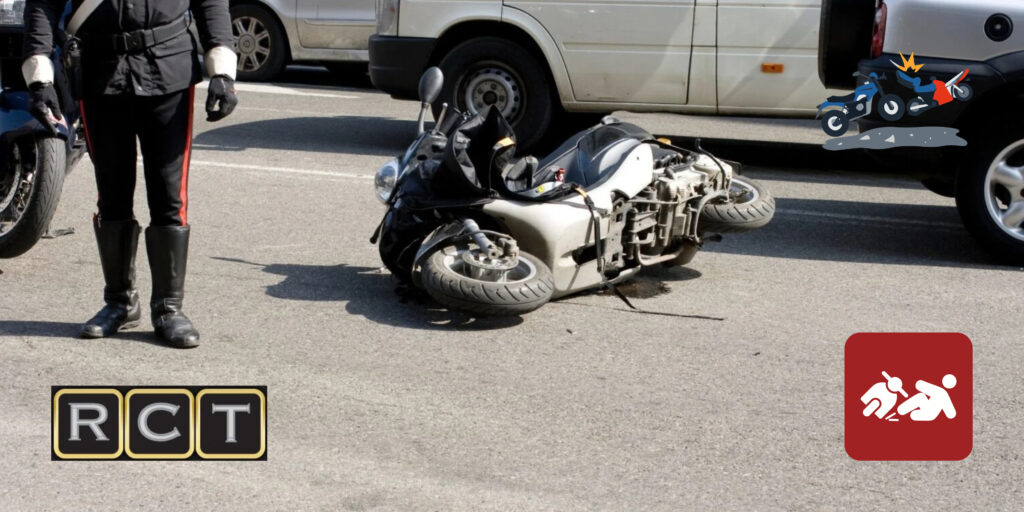
Motorcycle collisions can result from driver negligence, rider conduct, roadway conditions, mechanical problems, or several contributing factors.
Common scenarios include:
- Left-turn collisions: A driver turns across the path of an approaching motorcycle.
- Unsafe lane changes: A driver enters a motorcycle’s lane without adequately checking surrounding traffic.
- Failure to yield: A driver does not yield when required at an intersection or while entering traffic.
- Blind-spot collisions: A motorcycle is overlooked during a lane change or merge.
- Distracted or impaired driving: A driver’s attention, judgment, or reaction time is affected.
- Rear-end collisions: A following driver fails to stop when traffic slows.
- Roadway hazards: Debris, construction conditions, poor lighting, or other roadway problems contribute to the crash.
- Vehicle or equipment defects: A mechanical failure or defective component contributes to the collision or injuries.
Who May Be Responsible?
The other driver is often the primary source of liability, but some cases involve additional parties.
Depending on the circumstances, a claim may involve a commercial driver or employer, vehicle or motorcycle manufacturer, property owner, or governmental entity responsible for a roadway condition. Multiple parties may also share responsibility.
Uninsured and underinsured motorist coverage can be particularly important in motorcycle injury claims. If the driver responsible for a crash has no applicable liability coverage or insufficient limits to cover the rider’s damages, the rider’s own policy may provide additional protection depending on the terms of the policy. Reviewing available coverage should therefore be part of the initial case investigation.
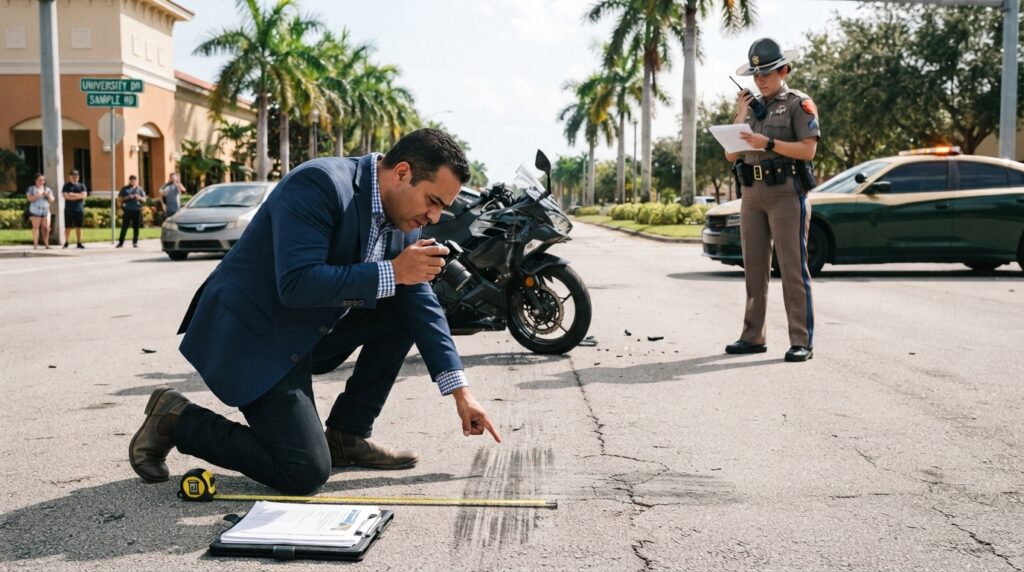
Investigating a Motorcycle Accident
Determining what happened requires more than reviewing the police report. Relevant evidence can include:
- Crash reports and photographs
- Traffic-camera or surveillance footage
- Eyewitness accounts
- Vehicle and motorcycle damage
- Traffic signals and roadway conditions
- Available electronic or vehicle data
- Medical records
- Accident reconstruction or other expert analysis
At Reinfeld Cabrera Tison, we investigate the circumstances surrounding a crash and evaluate the evidence before making conclusions about liability.
What Compensation May Be Available?
The damages in a motorcycle injury claim depend on the injuries, losses, liability, insurance coverage, and applicable law.
A claim may include:
Medical expenses for emergency care, hospitalization, surgery, medication, rehabilitation, and future treatment.
Lost income and earning capacity when injuries prevent a person from working or reduce their ability to earn in the future.
Pain and suffering associated with serious physical injuries and their consequences.
Physical impairment or disfigurement resulting from permanent injuries.
Property damage involving the motorcycle and other covered personal property.
When a motorcycle crash results in death, surviving family members may also have a wrongful death claim under Florida law.
What To Do After a Motorcycle Crash
After a serious motorcycle accident:
- Call 911 and make sure the collision is reported.
- Seek medical attention, even when injuries initially appear minor.
- Photograph the scene and visible injuries when you are physically able.
- Identify witnesses and preserve their contact information.
- Keep the motorcycle, helmet, and riding gear rather than discarding damaged equipment.
- Save medical records, bills, photographs, and insurance correspondence.
- Have the claim reviewed promptly, particularly when serious injuries or disputed liability are involved

Why Choose Reinfeld Cabrera Tison?
Our personal injury practice focuses on investigating serious accidents, dealing with insurance companies, and pursuing compensation for injured clients.
For motorcycle accident claims, that includes:
Case investigation: gathering and evaluating evidence concerning the crash.
Insurance analysis: identifying applicable liability, UM/UIM, and other available coverage.
Serious injury representation: documenting the medical, financial, and personal consequences of significant injuries.
Local representation: offices in Coral Springs and Fort Lauderdale serving clients throughout Broward County and South Florida.
Bilingual assistance: helping clients communicate about their cases and understand the legal process.
Contingency-fee representation: attorney fees are handled according to the terms of the representation agreement and are not charged unless compensation is recovered.
Frequently Asked Questions
Does Florida PIP cover motorcycle riders?
Generally, motorcycles fall outside Florida’s standard PIP no-fault system because the statutory definition of a covered motor vehicle generally refers to self-propelled vehicles with four or more wheels.
Can I recover compensation if I was not wearing a helmet?
Potentially. Florida allows riders over 21 to ride without protective headgear when the statutory $10,000 medical-benefits insurance requirement is satisfied. The effect of helmet use on an injury claim depends on the facts of the case.
What if I was partly responsible for the accident?
Your recovery can be affected by your percentage of fault. Under Florida’s current comparative-fault statute, a party found more than 50% responsible for their own harm cannot recover damages in a covered negligence action.
What happens if the driver who hit me has little or no insurance?
The claim should be reviewed for applicable uninsured or underinsured motorist coverage and other potential sources of recovery. The available insurance depends on the policies and circumstances involved.
How long do I have to file a motorcycle accident lawsuit in Florida?
A negligence action generally has a two-year limitations period, although exceptions and different deadlines can apply to particular claims.
What if the motorcycle crash caused a permanent disability?
A serious injury claim may include medical expenses, lost income, reduced earning capacity, pain and suffering, impairment, disfigurement, and other damages supported by the evidence and applicable law.
Florida Motorcycle Accident Legal Resources
Florida Statute §316.211 — Motorcycle and Moped Equipment
Florida’s motorcycle helmet and eye-protection requirements.
Florida Statutes Chapter 627 — Motor Vehicle No-Fault Law
Provides the statutory framework governing PIP coverage and related automobile insurance provisions.
Florida Statute §768.81 — Comparative Fault
Establishes Florida’s current comparative-fault rules.
Florida Statute §95.11 — Limitations of Actions
Provides the limitations periods applicable to different civil claims, including negligence.
Florida Highway Safety and Motor Vehicles — Florida Traffic Crash Facts
Provides statewide motorcycle crash, injury, and fatality statistics.
Speak With a Coral Springs Motorcycle Accident Attorney
If you or a loved one has been injured in a motorcycle crash in Coral Springs, Fort Lauderdale, Broward County, or elsewhere in South Florida, contact Reinfeld Cabrera Tison for a confidential evaluation of your claim.
Coral Springs & Fort Lauderdale, Florida
954-866-HURT (954-866-4878)
24 hours a day, 7 days a week
Free, Confidential Case Evaluation
This page provides general information about Florida law and is not a substitute for legal advice about an individual case. Applicable laws, insurance coverage, and filing deadlines depend on the circumstances.