
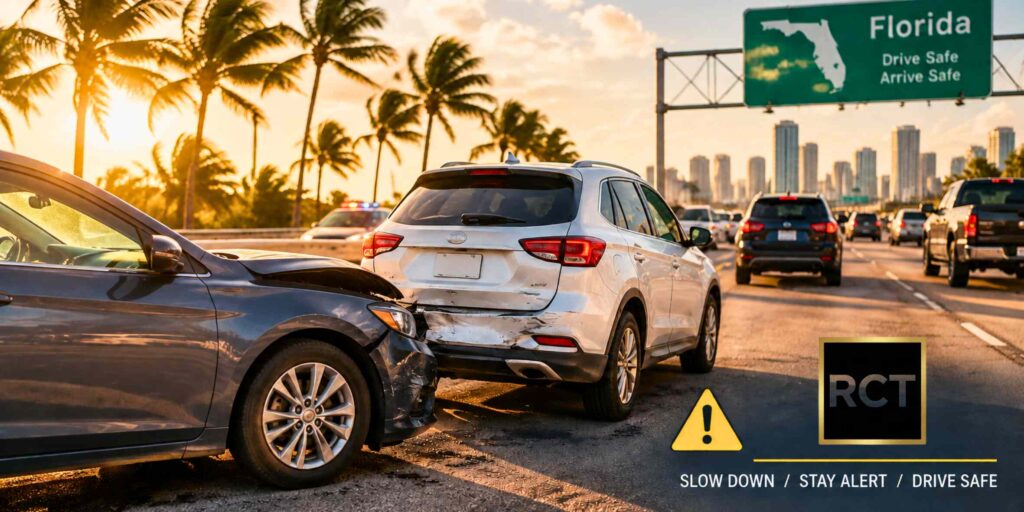
Crashes never arrive at a convenient moment, and the seconds that follow tend to blur together. Whether the impact happened on University Drive, along Sample Road, or somewhere else in Broward County, your attention belongs first on people’s safety and then on getting the collision officially recorded.
After that, the details you gather will quietly shape every medical bill and insurance conversation that comes next.
1. Check on Everyone, Then Clear the Roadway
Before you think about paperwork, find out whether anyone is hurt, yourself included. Dial 911 if someone is injured or the scene feels unsafe. Leave an injured person where they are unless staying put would expose them to greater harm, such as a fire or oncoming traffic.
If the vehicles still run and are sitting in a live lane, shift them onto the shoulder or into a nearby lot. Keep your hazard lights flashing and wait well away from moving cars.
2. Make Sure the Police Know
Florida law requires a crash to be reported to law enforcement when it causes an injury or death, or apparent property damage of at least $2,000. Inside city limits, the Coral Springs Police Department is the agency to contact.
If an officer comes to the scene, describe what you saw as precisely as you can and resist filling gaps with guesses. Before you leave, ask how to request the crash report and jot down the report number.
3. Trade Details With the Other Driver
You’ll want the other driver’s name and phone number, plus their license, registration, and insurance information. Anyone who watched the collision unfold is worth approaching as well. A bystander with no stake in the outcome can lend real credibility to your account later.
The roadside is a poor place to argue about fault. Stick to what happened, and let the officers and insurers work out who was responsible.
4. Capture the Scene Before It Changes
If you’re physically able, photograph the damage to each vehicle, then step back and take in the road layout along with any nearby signals, signs, or skid marks. Mix wide shots with close-ups.
Photos tend to outlast recollection. If the drivers later describe the crash in different ways, images taken within minutes of impact can carry more weight than anyone’s memory.
5. Get Examined, Even If You Feel Okay
Adrenaline is a powerful painkiller. Neck and back strain, along with concussion symptoms, can take hours or even days to surface, so a medical evaluation makes sense whenever something feels off.
The calendar matters here, too. Under Florida’s Personal Injury Protection (PIP) law, you generally need to receive initial medical services and care within 14 days of the crash to qualify for PIP medical benefits. When you do qualify, PIP typically pays 80% of eligible medical expenses, within policy limits and other requirements.
6. Tell Your Insurer and Keep Everything in Writing
Contact your insurance company soon after the crash and answer their questions about what happened. Hold onto claim paperwork and emails, along with notes from each phone call.
Pause before signing a release or accepting an early settlement offer. The full scope of your injuries may not be clear yet, and a release is generally final. If the other driver denies responsibility or your insurer pushes back on the claim, a legal consultation can clarify where you stand.
When Should You Contact a Car Accident Lawyer?
A serious injury is reason enough to talk with an attorney. So is a dispute with an insurer over who caused the crash, or a claim that keeps stalling whenever you try to recover compensation. A lawyer can review the evidence and explain whether you may have a claim against another driver.
If you were hurt in a collision in Coral Springs or elsewhere in Broward County, RCT Law can help you understand where you stand and what your options are. Reach out to the firm to talk through your circumstances and decide on a sensible next step.