Bottom Line Up Front: Yes, you can sue a Florida hospital for the negligence of an independent contractor doctor. While hospitals generally deny liability for non-employee physicians, Florida tort law recognizes three major legal exceptions: Apparent Agency, Corporate Negligence (negligent credentialing), and Non-Delegable Duty (express or implied contractual obligations).
The Independent Contractor Defense & Florida Tort Law
When medical malpractice occurs in an operating room or emergency department, hospitals routinely issue standard denial letters claiming the negligent physician was an “independent contractor” rather than a direct employee. Under Florida common law, the general rule dictates that an entity is not vicariously liable for the torts of independent contractors (Public Health Trust of Dade County v. Valcin, 507 So. 2d 596).
However, Florida courts recognize three distinct legal frameworks to defeat this defense and hold healthcare facilities financially accountable.
| Legal Exception | Key Florida Case Precedent | Statutory Basis | Legal Standard Required |
|---|---|---|---|
| Apparent Agency | Roessler v. Novak (858 So. 2d 1158) | Common Law / Restatement (Second) of Agency § 229 | Hospital created the representation that the doctor was an agent; patient reasonably relied. |
| Corporate Negligence | Insinga v. LaBella (543 So. 2d 209) | Fla. Stat. § 395.0191 / Fla. Stat. § 766.110 | Hospital failed to exercise reasonable care in selecting or retaining an incompetent physician. |
| Non-Delegable Duty | Wax v. Tenet Health System (955 So. 2d 1) | Fla. Admin. Code 59A-3.020 / Admission Contract | Hospital undertook a statutory, regulatory, or express contractual obligation to provide care. |
1. Apparent Agency (Roessler v. Novak)
Under the landmark ruling in Roessler v. Novak, a hospital can be held vicariously liable for an independent contractor doctor’s mistakes if the hospital created the appearance of an employer-employee relationship. To prove apparent agency, three elements must be established:
- Representation by the Principal: The hospital held itself out as the provider of the care or failed to inform the patient that the specialist (e.g., radiologist, anesthesiologist, or emergency physician) was an independent contractor.
- Reliance by the Third Party: The patient looked to the hospital for treatment rather than seeking out a specific individual doctor.
- Change of Position: The patient accepted treatment based on the reasonable belief that the attending doctor was a hospital employee.
Key Factor: Emergency room patients rarely choose their attending physician or radiologist. When a patient enters a facility like Broward Health Medical Center or Baptist Hospital of Miami, they accept care from whoever is assigned—establishing strong grounds for apparent agency.
2. Direct Corporate Negligence & Negligent Credentialing (Insinga v. LaBella)
In Insinga v. LaBella, the Florida Supreme Court established that hospitals owe an independent, direct duty of care to their patients to ensure the competence of staff doctors. A hospital commits corporate negligence when it grants or renews staff privileges for a doctor whom it knew—or reasonably should have known—was unqualified, incompetent, or prone to surgical errors.
Under Fla. Stat. § 395.0191, Florida health systems are legally required to investigate:
- Prior medical malpractice judgments and settlements.
- Historical disciplinary actions by medical licensing boards.
- Revocation or restriction of privileges at other hospital networks.
If a hospital bypasses thorough background vetting to fill clinical shifts, it incurs direct, primary liability for any resulting patient injuries – regardless of independent contractor contracts.
3. Non-Delegable Duty & Contractual Obligations (Wax v. Tenet)
While Florida common law does not impose an automatic non-delegable duty for all hospital care, specific legal obligations cannot be passed off to third-party contractors:
- Statutory and Regulatory Duties: In Wax v. Tenet Health System, the Fourth District Court of Appeal held that Florida Administrative Code regulations governing anesthesia services created a non-delegable duty for hospitals to ensure safe delivery of care.
- Express Contractual Terms: If a hospital’s admission agreement or treatment consent form states that the hospital will provide emergency or surgical services, the facility cannot escape liability by outsourcing those services (Pope v. Winter Park Healthcare Group).
How South Florida Hospitals Try to Evade Responsibility
Hospital defense teams employ specific tactics to shut down claims before trial:
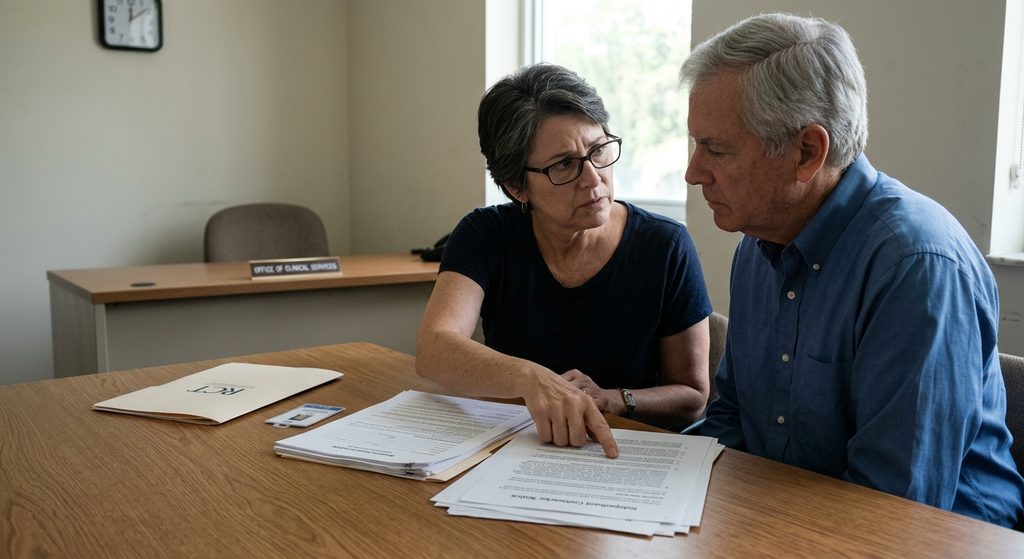
- Fine-Print Admission Waivers: Hospitals frequently embed “Independent Contractor Notices” into 10-page emergency room intake paperwork. However, Florida courts have repeatedly ruled that signing complex forms during an acute medical crisis does not automatically destroy an apparent agency claim.
- Badge and Uniform Disclaimers: Facilities require doctors to wear badges marked “Independent Contractor.” If the badge was obscured, unreadable, or never drawn to the patient’s attention during emergency treatment, liability remains a question of fact for a jury.
Navigating Malpractice Litigation in South Florida
Establishing hospital liability requires immediate action before critical records are altered or lost. Medical malpractice litigation in Broward County (17th Judicial Circuit), Miami-Dade County (11th Judicial Circuit), and Palm Beach County (15th Judicial Circuit) demands rigorous compliance with Florida’s Chapter 766 pre-suit process, including:
- Obtaining complete medical records from both the treating facility and contracted physician groups.
- Securing a sworn affidavit of merit from a board-certified expert witness in the same specialty (pursuant to Fla. Stat. § 766.102).
- Serving formal Chapter 766 Notices of Intent to Initiate Litigation to toll the statute of limitations.
Why Reinfeld Cabrera Tison Is Built to Handle Complex Hospital Malpractice Claims
Hospital risk management groups and insurance carriers rely on the “independent contractor” defense to deflect liability and delay legitimate claims. Overcoming this strategy requires trial attorneys who understand corporate healthcare structures, medical credentialing discovery, and Florida Chapter 766 statutory requirements.
At Reinfeld Cabrera Tison (RCT Law), our trial team brings dedicated experience fighting complex medical negligence claims across South Florida courts:
- Direct Attorney Representation: Unlike high-volume billboard law firms that assign files to non-lawyer case managers or paralegals, your claim is managed directly by senior litigators like lead trial attorney Devin P. Tison, Esq.
- Immediate Evidence Preservation: We serve formal preservation demands to secure internal hospital credentialing records, emergency department shift logs, electronic health record (EHR) audit trails, and facility contract agreements before evidence disappears.
- Chapter 766 Pre-Suit Execution: Our attorneys work with board-certified medical experts in matching specialties to secure sworn affidavits of merit that satisfy Florida’s strict pre-suit requirements.
- South Florida Venue Experience: We regularly litigate complex personal injury and wrongful death claims across Broward County (17th Judicial Circuit), Miami-Dade County (11th Judicial Circuit), and Palm Beach County (15th Judicial Circuit).
Take Action: Schedule Your Free Medical Malpractice Case Evaluation
Florida’s strict 2-year statute of limitations (Fla. Stat. § 95.11(4)(b)) leaves zero room for delay especially when investigating complex corporate liability and agency relationships before the statutory deadline expires.
If you or a loved one suffered severe harm during a hospital stay in South Florida, contact Reinfeld Cabrera Tison for a 100% free, confidential consultation. We handle all medical malpractice cases on a contingency fee basis: you pay $0 in legal fees or costs unless we win your case.
- Direct Phone (24/7): (954) 866-HURT / (954) 866-4878
- Coral Springs Office: 9625 W. Sample Rd, Coral Springs, FL 33065
- Fort Lauderdale Office: 2933 W. Cypress Creek Rd, Suite 201, Ft. Lauderdale, FL 33309
- Online: Request a Free Case Evaluation at lawrct.com
About the Author
Of Counsel, Reinfeld Cabrera Tison (RCT Law)
With nearly four decades of legal experience in Florida, I serve as Of Counsel at Reinfeld Cabrera Tison. Holding a Juris Doctorate and Master of Laws (LL.M.) in Taxation from the University of Miami, my career has been dedicated to protecting individuals and families across South Florida. Whether guiding clients through complex healthcare regulations, estate planning, or institutional liability, I believe in providing direct, hands-on advocacy. At RCT Law, our attorneys fight tirelessly across Broward, Miami-Dade, and Palm Beach Counties to hold healthcare facilities and corporate entities accountable when patient safety is compromised.