
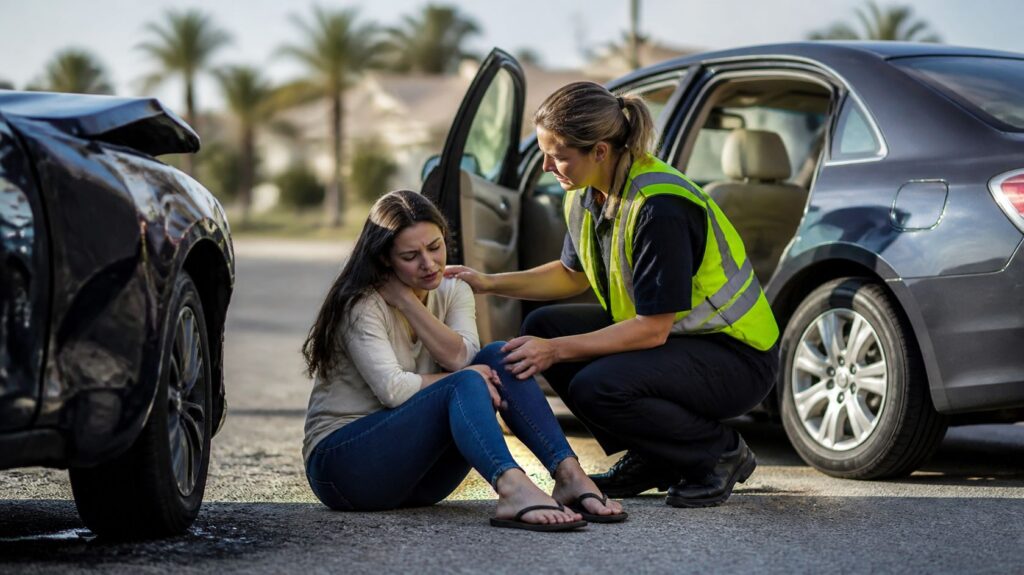
Yes. An injured passenger in Florida can recover compensation through Personal Injury Protection (PIP) benefits and bodily injury liability claims. Depending on the crash details, you may file claims against the at-fault driver or the driver of the car you rode in. You may also pursue claims against the vehicle owner, an employer, or an uninsured motorist policy.
Riding in a car puts your physical safety in someone else’s hands. When a collision happens, you did nothing to cause the crash, yet you face medical bills and lost wages. Sorting out Florida insurance rules as a passenger requires knowing which policy pays first and where to look when coverage falls short.
The Florida Department of Highway Safety and Motor Vehicles recorded 30,944 injured or fatally injured passenger-car passengers in 2024. That total includes 183 fatalities and 1,203 incapacitating injuries. Locally, Florida Health CHARTS recorded 38,338 total crashes and 23,115 total injuries in Broward County during 2024. Broward’s crash rate sits roughly 16% above the statewide average.
Which Insurance Pays an Injured Passenger’s Medical Bills?
Under Florida Statutes §627.736, Personal Injury Protection (PIP) covers your initial medical bills and lost wages regardless of fault. You do not automatically bill the insurance company of the car you rode in. Florida law applies a strict priority order based on vehicle ownership and household residency.
| Priority Order | Applicable PIP Policy | Qualifying Condition |
| 1. First Priority | Your own auto insurance policy | You own a motor vehicle subject to Florida PIP requirements. |
| 2. Second Priority | A resident relative’s auto policy | You do not own a vehicle, and you live with a relative who carries Florida PIP. |
| 3. Third Priority | The occupied vehicle’s policy | You neither own a vehicle nor live with an insured relative. |
Out-of-state visitors should not assume Florida PIP applies to their claim. Residency rules, policy terms, and vehicle registration status all affect eligibility.
What Does Florida PIP Actually Cover?
Basic PIP benefits pay 80% of reasonable and medically necessary medical expenses, plus 60% of lost income. Combined medical and disability payouts cap at $10,000, with an additional $5,000 death benefit.
Two strict rules determine whether you receive the full $10,000:
- The 14-day treatment rule: You must receive initial medical care within 14 days of the crash to qualify for PIP benefits.
- The emergency medical condition limit: A qualifying medical professional must diagnose an emergency medical condition for you to access the full $10,000. Without that diagnosis, medical benefits cap at $2,500.
PIP never pays 100% of your medical bills, and it provides zero compensation for pain and suffering. For details on handling unpaid balances during an active case, read our guide on who pays medical bills while a personal injury claim is pending in Florida.
Does Florida Still Require PIP in 2026?
Yes. Florida lawmakers introduced HB 1181 in 2025 to repeal the no-fault PIP system. The bill died in the Judiciary Committee on June 16, 2025, and its Senate companion also failed to pass. PIP remains active law under Florida Statutes §627.736.
Can You Sue the Driver Who Was Giving You a Ride?
Yes. Under Florida law, you can pursue a bodily injury negligence claim against the driver of the car you occupied. This rule applies even when the driver is a close friend or family member. Entering someone else’s vehicle voluntarily does not make you legally responsible for their driving mistakes.
When you file a claim against a friend or relative, you seek recovery from their bodily injury liability insurance policy. You are not targeting their personal bank account. However, recovering damages beyond your economic losses requires meeting a specific statutory threshold.
Florida’s Serious Injury Threshold
Under Florida Statutes §627.737, you cannot recover noneconomic damages like pain and suffering unless your injuries meet at least one of four criteria:
- Significant and permanent loss of an important bodily function.
- Permanent injury within a reasonable degree of medical probability, other than scarring or disfigurement.
- Significant and permanent scarring or disfigurement.
- Death.
If your injuries do not meet this threshold, you can still pursue unpaid economic losses that exceed your PIP coverage. Those losses include out-of-pocket medical bills and remaining lost wages.
What Happens If the At-Fault Driver Has No Bodily Injury Insurance?
Florida generally does not require drivers to carry bodily injury liability coverage, except for drivers with specific prior convictions like a DUI. As noted in the Florida Bar Automobile Insurance Consumer Pamphlet, a driver can carry legally compliant state minimum insurance and still lack coverage for your injuries.
When an at-fault driver lacks bodily injury coverage or carries low limits, Uninsured and Underinsured Motorist (UM/UIM) coverage applies. Under Florida Statutes §627.727, insurers must offer UM coverage alongside bodily injury policies unless the policyholder rejects it in writing.
Depending on the policy terms and stacking rules, you may access UM/UIM benefits through your own auto policy or a resident relative’s policy. You may also qualify under the policy covering the car you rode in.
Warning Before You Sign: Under Florida Statutes §627.727(6)(a), you must notify applicable UM insurers by certified or registered mail before accepting a settlement from an at-fault driver’s insurer. The UM insurer has 30 days to respond. Signing a release too early can forfeit your right to collect UM/UIM benefits.
Can the Vehicle Owner or an Employer Also Be Responsible?
Liability in a passenger injury claim often extends beyond the person behind the wheel. Identifying every liable party increases the insurance coverage available for severe injuries.
- The vehicle owner: Under Florida’s dangerous instrumentality doctrine, affirmed in Emerson v. Lambert (2023), a vehicle owner who lends their car is vicariously liable for the driver’s negligence. Under Florida Statutes §324.021(9)(b)(3), statutory caps for a natural-person owner generally limit vicarious liability to $100,000 per person and $300,000 per incident, with added provisions for economic damages.
- An employer: If the at-fault driver was working during the crash, their employer may bear vicarious liability. In the federal case Young v. Panera, LLC (2024–2025), a passenger rear-ended by a Panera employee obtained an amended judgment of $515,806.24 after a seven-day jury trial.
- Rideshare companies: If you suffered injuries while riding in an Uber or Lyft, commercial insurance policies up to $1 million may apply depending on the driver’s app status. Read our rideshare accident guide for specific coverage tiers.
- Vehicle or parts manufacturers: If a defective airbag, seat belt, or seat frame worsened your injuries, you may have an enhanced-injury claim against the manufacturer. Review our overview of defective product injury claims for more details.
Can an Insurance Company Blame You for the Crash or Your Injuries?
Florida follows a modified comparative negligence rule under Florida Statutes §768.81. If you bear some responsibility for your own harm, your compensation drops by your percentage of fault. If a court finds you more than 50% responsible, you recover nothing.
Insurance adjusters rarely succeed in blaming a passenger for causing a collision. In Bessett v. Hackett (1953), the Florida Supreme Court ruled that a driver’s negligence is not imputed to a passenger, even if they share travel expenses. In Sisam v. Brantley (1979), an appellate court overturned a verdict assigning 60% fault to a 12-year-old passenger because she had no reasonable warning or opportunity to prevent the crash.
How Seat Belt Use Affects Your Claim
Under Florida Statutes §316.614, all passengers under 18 and all adult front-seat passengers must wear seat belts. The statute does not require adult rear-seat passengers to buckle up.
Skipping a seat belt in the back seat can still affect your financial recovery. In Pasakarnis v. Florida Insurance Guaranty Association, American Automobile Association v. Tehrani (1987), and Ridley v. Safety Kleen Corp., Florida courts allowed insurers to raise a seat-belt defense when competent medical evidence proves that a belt would have prevented or reduced your injuries. Not wearing a belt does not bar your claim, nor does it make you responsible for causing the crash. It can, however, reduce your final damage award.
Common Misconceptions About Florida Passenger Injury Claims
| Common Myth | What Florida Law Actually Provides |
| You must sue the driver of the car you were riding in. | You can file claims against any at-fault driver, vehicle owner, or employer. |
| The vehicle owner’s insurance automatically pays your medical bills. | Your own PIP policy or a resident relative’s PIP policy pays first. |
| Florida requires every driver to carry bodily injury coverage. | Florida generally does not require bodily injury liability coverage. |
| You cannot file a claim if a friend or relative was driving. | You can seek bodily injury coverage from their auto policy. |
| Not wearing a seat belt automatically destroys your case. | Seat-belt nonuse only reduces damages if proven to have worsened your injuries. |
| You must wait for the at-fault driver’s insurer to pay before getting medical care. | PIP is first-party coverage that pays initial medical bills immediately. |
What Should You Do After Being Injured as a Passenger?
Because you were not driving, insurers often rely on your witness account to resolve disputed liability. Taking immediate steps protects your health and your legal claim.
- See a doctor within 14 days: Get evaluated immediately, even if you feel fine. Adrenaline masks soft-tissue and head injuries, and missing the 14-day window forfeits your PIP benefits.
- Collect driver and witness details: Record the names, phone numbers, and insurance details for every driver involved. Gather contact information from independent bystanders.
- Document the crash scene: Photograph vehicle damage, road conditions, and visible injuries. Read our guides on what to do after a car accident in Coral Springs and how to preserve video evidence.
- Stick strictly to the facts: State only what you directly observed when speaking with police or insurers. Never guess vehicle speeds or distances. In Glade v. Govey (2026), Florida’s Fourth District Court of Appeal reversed a punitive damages order for an injured Lyft passenger because her testimony could not pinpoint how long the driver had been looking at a phone before impact.
- Obtain the Florida crash report: Under Florida Statutes §316.066, police must file a long-form report within 10 days for any crash involving injury or complaints of pain. Statements in the report are generally inadmissible at trial, yet the document identifies every involved insurer.
- Avoid giving recorded statements or signing releases: Insurance adjusters look for inconsistencies to reduce payouts or shift fault. Speak with an attorney before signing settlement paperwork.
How Long Do You Have to File a Passenger Injury Claim in Florida?
Under Florida Statutes §95.11(5)(a), you have two years from the date of the crash to file a personal injury lawsuit based on negligence. Missing this two-year statute of limitations permanently bars your right to seek compensation in court.
Shorter deadlines also govern specific parts of your claim:
- 14 days: Mandatory deadline to seek initial medical treatment for PIP eligibility.
- 30 days: Statutory response window when notifying a UM/UIM insurer of a pending liability settlement.
- Policy notice rules: Auto insurance contracts require prompt reporting of a collision, often within days or weeks.
- Government claims: Crashes involving city buses, county vehicles, or state agencies trigger strict pre-suit notice rules under Florida Statutes §768.28.
Contact Us
Coral Springs Office
9625 W. Sample Rd
Coral Springs, FL 33065
Tel: 954-866-HURT
(954-866-4878)
Fax: 954-334-1526
Frequently Asked Questions
Can I recover compensation if both drivers share fault for the crash?
Yes. When two drivers share fault, you can pursue bodily injury claims against both drivers’ insurance policies in proportion to their responsibility. Multi-party claims often require coordinated negotiations across multiple insurers, which we cover in our overview of Broward personal injury disputes.
What if I was injured while riding in an Uber or Lyft in Florida?
Rideshare passengers are protected by commercial insurance policies required under Florida Statutes §627.748. When a rideshare driver has accepted a ride or is transporting a passenger, the rideshare company must maintain at least $1 million in primary liability coverage.
Does my health insurance cover medical bills after PIP runs out?
Yes. Once your $10,000 PIP limit runs out, your private health insurance, Medicare, or Medicaid can pay ongoing medical expenses. Your health insurer may later assert a lien or right of subrogation against your final bodily injury settlement.
Speak With a Coral Springs Car Accident Attorney
Passenger injury claims frequently involve overlapping PIP policies, uninsured drivers, and disputed liability between multiple vehicles. At Reinfeld Cabrera Tison, our attorneys review every available insurance policy to identify all sources of coverage for your medical bills and lost wages.
We represent injured passengers in Coral Springs, Fort Lauderdale, and throughout Broward County on a contingency fee basis. You pay no attorney fees unless we recover compensation for you. Call our Coral Springs office at (954) 866-4878 or contact us online for a free case evaluation.