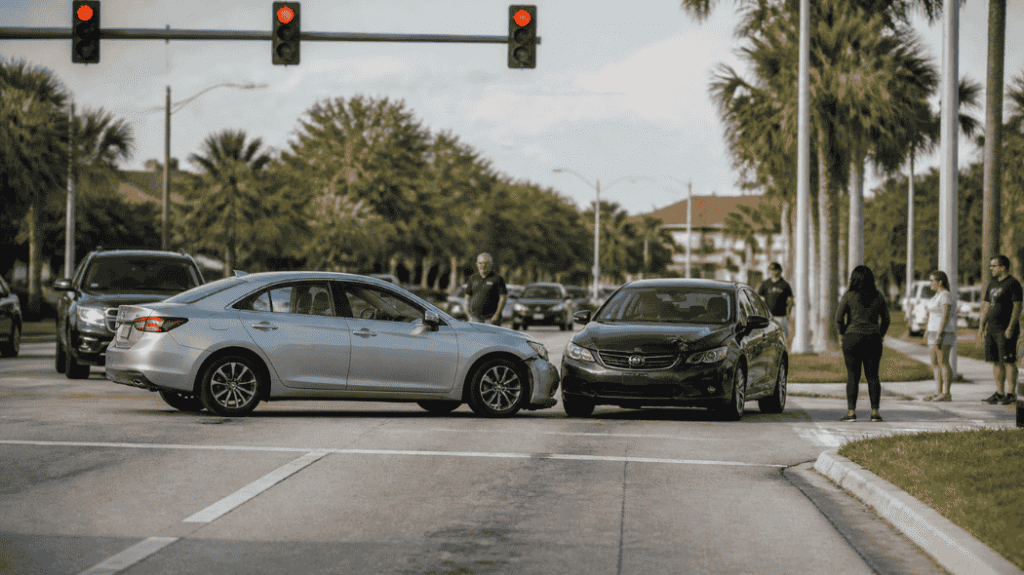
A driver turns left across traffic. Another vehicle approaches from the opposite direction. A collision follows. So, who is at fault?
Under Florida law, the driver making the left turn usually has the duty to yield. But that does not mean the turning driver is automatically responsible for every left-turn accident. The other driver may have been speeding, running a red light, or driving carelessly. The traffic signal may also change the legal analysis.
Florida law looks at what each driver did before the crash. That distinction matters because both drivers can share responsibility for a collision. In some cases, the driver traveling straight may bear a substantial portion of the fault.
If you were injured in a left-turn accident in Coral Springs, Broward County, or elsewhere in South Florida, understanding how Florida determines fault can help you evaluate what happened and what evidence matters.
What Does Florida Law Say About Left-Turn Accidents?
The main statute governing left-turn accidents is Florida Statute §316.122. It requires a driver intending to turn left within an intersection, or into an alley, private road, or driveway, to yield to approaching vehicles traveling in the opposite direction.
That obligation applies when the approaching vehicle is within the intersection or close enough to constitute an immediate hazard.
In practical terms, a driver cannot simply begin turning because there appears to be enough room. The driver must consider how quickly the approaching vehicle is moving and whether there is enough time to complete the turn safely.
What Does “Immediate Hazard” Mean?
Florida’s immediate-hazard standard is important because the law does not establish one universal distance at which an approaching vehicle automatically has the right-of-way.
Consider this situation: You are waiting to turn left at an intersection. A vehicle is approaching from the opposite direction. It looks far away, so you begin turning. However, that vehicle is traveling well above the speed limit and reaches the intersection much sooner than you expected.
Was the approaching vehicle close enough to constitute an immediate hazard when you started turning? That depends on the circumstances.
A court or insurance adjuster may examine the approaching vehicle’s speed, its distance from the intersection, and the time needed to complete the turn. Visibility and road conditions can also matter.
The driver turning left must make a reasonable judgment before entering the opposing lane. A mistake in that judgment can support a finding of negligence.
Does the Driver Going Straight Always Have the Right-of-Way?
Generally, a driver traveling straight through an intersection has the right-of-way over a vehicle turning left across their path. But having the right-of-way does not give someone permission to drive carelessly.
Florida drivers must still obey speed limits and operate their vehicles with reasonable care. A driver approaching an intersection at excessive speed may contribute to a collision, even when the other motorist had the initial duty to yield.
That is why determining fault requires examining both vehicles. The fact that one driver was turning left is important, but it does not end the investigation.
Is the Driver Turning Left Always at Fault in Florida?
No. The turning driver often bears responsibility because Florida law generally requires that driver to yield. However, the circumstances can support a different result or a finding of shared fault.
For example, imagine a driver begins a left turn after checking that the opposite lane is clear. An oncoming vehicle then enters the intersection at an excessive speed. If the approaching driver’s speed made the collision unavoidable or materially contributed to it, that driver’s conduct may also be considered.
The same principle applies when the other motorist runs a red light, makes an unlawful pass, or drives while distracted.
The central question is not simply which vehicle was turning. It is whether either driver’s conduct fell below the standard of reasonable care and contributed to the crash.
What If the Oncoming Driver Was Speeding?
Speeding can make a significant difference in a left-turn accident claim.
A driver approaching an intersection at an excessive speed may reach the intersection much sooner than a turning motorist could reasonably anticipate. That can affect whether the approaching vehicle constituted an immediate hazard and whether the collision could have been avoided.
However, speeding does not automatically excuse a driver who turns directly into the path of oncoming traffic. The evidence must show how the excessive speed contributed to the accident.
Investigators may examine vehicle damage, braking marks, event data recorder information, and video footage to estimate the approaching vehicle’s speed. Accident reconstruction can help establish when each vehicle entered the intersection.
What If the Other Driver Ran a Red Light?
A driver who runs a red light may bear significant responsibility for a left-turn collision.
The signal matters because the right-of-way rules change depending on which driver has a lawful signal. A motorist making a left turn on a green circular signal must still yield to opposing traffic. A driver with a green arrow has permission to make the indicated movement, subject to applicable pedestrian and traffic rules.
If the oncoming driver entered the intersection against a red light, that conduct may support a finding of negligence.
But signal disputes are common. One driver may remember seeing green while the other insists the light had already changed. Witnesses and available video can become especially important in these cases.
Can a Driver Making an Unlawful Pass Be Responsible?
Yes. Florida’s left-turn statute also addresses vehicles lawfully passing on the left. A driver making a left turn must account for certain vehicles approaching from behind when they are lawfully passing and constitute an immediate hazard.
The word lawfully matters. A motorist attempting an illegal pass may share responsibility for a resulting collision.
For example, a driver may signal and begin turning left while another motorist suddenly attempts to overtake the vehicle using a lane where passing is prohibited. The turning driver’s actions still need to be examined, but the passing driver’s conduct may also contribute to the crash.
How Do Traffic Signals Affect Fault in a Florida Left-Turn Accident?
Not every left-turn accident happens at an intersection with the same signal arrangement. Florida law distinguishes between a green circular signal, a green arrow, and other traffic indications.
Under Florida Statute §316.075, a green circular signal allows a driver to turn left, but the driver must yield to opposing vehicles and pedestrians lawfully within the intersection. A green arrow authorizes the movement indicated by that arrow, subject to applicable rules.
This distinction can be decisive.
Green Light Does Not Mean You Can Turn Without Yielding
A common misconception is that a green light gives a left-turning driver the same right-of-way as vehicles traveling straight.
It does not.
If you have a regular green light and want to turn left, you generally must wait until there is a safe opening in opposing traffic. The light permits the turn, but it does not remove the duty to yield.
Does a Green Arrow Give the Turning Driver Priority?
A green arrow provides a protected movement. It generally means the driver may proceed in the direction indicated without yielding to opposing traffic that faces a red signal.
Still, the driver must watch for pedestrians and other traffic lawfully occupying the intersection. A green arrow does not excuse a collision caused by ignoring someone already in the driver’s path.
What If Both Drivers Disagree About the Signal?
Signal disputes can make fault difficult to establish. A driver may claim to have entered on green while another insists the light had changed before the collision.
The investigation should look beyond what the drivers remember. Traffic camera footage, nearby business surveillance, dashcam recordings, and independent witnesses may help establish the sequence of events.
The timing of the signal can also matter. A vehicle entering an intersection legally may still be within it when the signal changes.
What Do Florida Court Cases Say About Left-Turn Accidents?
Florida appellate decisions show why left-turn accident claims cannot be decided by looking at the turning maneuver alone.
Gonzalez v. Rose: Disputes Over Traffic Signals
In Gonzalez v. Rose, 752 So. 2d 39 (Fla. 3d DCA 2000), a collision occurred at a Miami intersection. The parties disputed the traffic signal, and the jury found the left-turning driver negligent.
The Third District Court of Appeal upheld the result.
The case illustrates how a jury may have to resolve competing accounts of what happened at an intersection. A driver’s version of the signal sequence is not automatically accepted simply because that driver claims to have had the right-of-way.
Shaver v. Carpenter: A Police Officer Does Not Decide Civil Fault
In Shaver v. Carpenter, No. 2D13-117 (Fla. 2d DCA Nov. 26, 2014), a motorcycle carrying two people collided with a car making a left turn.
The jury initially assigned 95% of the fault to the turning driver and 5% to the motorcyclist. However, the appellate court ordered a new trial because of evidentiary errors, including testimony from an investigating trooper expressing an opinion about which driver violated the right-of-way.
The important lesson is that a police officer’s opinion does not settle civil liability. The jury must evaluate admissible evidence and decide which conduct caused the collision.
Luzardo v. State: Excessive Speed Can Change the Picture
In Luzardo v. State, No. 3D13-1678 (Fla. 3d DCA Oct. 1, 2014), a left-turning vehicle collided with an approaching SUV on Tamiami Trail in Miami-Dade County. Evidence showed that the SUV had been traveling at approximately 83.9 mph in a 55 mph zone.
The case involved a criminal prosecution, not a civil lawsuit for accident damages. The Third District considered whether the SUV driver’s conduct met the legal standard for criminal recklessness. It did not decide how a civil jury should divide responsibility for the crash.
Still, the facts demonstrate why speed evidence matters. A vehicle approaching far faster than the posted limit may reach an intersection in circumstances the other driver did not reasonably anticipate.
How Is Fault Proven After a Left-Turn Accident?
A driver’s account of the collision is only one piece of the evidence. Establishing fault often requires reconstructing what happened during the seconds before impact.
The available evidence may include:
- Traffic and surveillance video: Footage from traffic cameras, nearby businesses, homes, or dashcams may show the signal, vehicle positions, and timing of the turn.
- Witness statements: Independent witnesses may help establish which vehicle entered the intersection first or whether a driver was speeding.
- Vehicle damage: The location and severity of impact damage can help investigators understand the vehicles’ positions and direction of travel.
- Roadway evidence: Skid marks, debris, tire marks, and final vehicle positions may help reconstruct the collision.
- Electronic vehicle data: Some vehicles record information about speed, braking, and throttle activity before a crash.
- Accident reconstruction: When the facts are disputed, a reconstruction expert may analyze physical evidence and electronic data to estimate how the collision occurred.
Why Should You Request Video Footage Quickly?
Video can be among the strongest forms of evidence in a left-turn accident claim. Unfortunately, it may not remain available for long.
Businesses and property owners often overwrite surveillance recordings after a limited period. A camera that captured the collision on Monday may no longer have the footage several weeks later.
If a nearby business, residence, or traffic camera may have recorded the accident, identifying the source and requesting preservation promptly can make a substantial difference.
Does the Police Report Determine Who Was at Fault?
No. A Florida crash report can provide useful information, but it does not make the final civil determination of liability.
The report may contain driver statements, witness information, diagrams, and an officer’s observations. An insurance company may use it when evaluating a claim, but the report is not a substitute for examining the underlying evidence.
The distinction matters. As Shaver v. Carpenter illustrates, an investigating officer’s opinion about which driver violated the right-of-way cannot simply replace the jury’s responsibility to evaluate the evidence.
If the report contains an error or leaves out important information, additional evidence may help establish what actually happened.
What If the Accident Happened While Someone Was Turning Into a Driveway?
Left-turn accidents do not happen only at intersections. A vehicle turning across traffic to enter a private driveway or road can also cause a serious collision.
Florida Statute §316.122 expressly covers left turns into alleys, private roads, and driveways. The driver making that turn must yield to approaching vehicles when they are within the intersection or close enough to constitute an immediate hazard.
A different rule applies when a driver is entering a public road from a private driveway or property. Under Florida Statute §316.125, that driver must yield to vehicles approaching on the highway when they are close enough to constitute an immediate hazard.
These situations may look similar, but the legal duties are not identical. The direction each vehicle was traveling and the maneuver it was making matter.
For example, if a driver crosses an opposing lane to enter a shopping center, §316.122 may apply. If another driver pulls out of the shopping center into the road, §316.125 may govern that driver’s duty to yield.
Can Both Drivers Be at Fault in a Florida Left-Turn Accident?
Yes. Florida follows a modified comparative negligence system under Florida Statute §768.81.
When a person is partly responsible for their own injuries, their compensation is generally reduced by their percentage of fault. However, a person found to be more than 50% responsible for their own harm cannot recover damages in most negligence actions covered by the statute.
Here is a practical example.
Suppose a driver turns left across an intersection and collides with an oncoming vehicle. The evidence shows that the turning driver failed to yield, but the oncoming driver was also speeding.
A jury could find the turning driver 70% responsible and the oncoming driver 30% responsible. If the injured oncoming driver’s damages were valued at $100,000, the recovery would generally be reduced by that driver’s 30% share of fault, leaving $70,000.
Now imagine the injured driver is found 51% responsible. Under Florida’s modified comparative negligence rule, that driver generally cannot recover damages from another party.
The percentages depend on the evidence. They are not assigned automatically based on which vehicle was turning.
What Should You Do After a Left-Turn Accident in Florida?
After a collision, your first priority should be getting medical attention if you are injured. Once immediate safety concerns have been addressed, try to preserve information that may help establish how the accident happened.
If you can do so safely, photograph the vehicles and the intersection. Record the names and contact information of witnesses. Note nearby businesses or properties that may have surveillance cameras.
Avoid assuming that the police report or the other driver’s explanation tells the whole story. If the other motorist claims you caused the crash, that statement does not establish legal fault.
A left-turn accident may appear straightforward at first. But signal timing, excessive speed, visibility, and the actions of both drivers can change the liability analysis.
If you were injured in a left-turn collision in Coral Springs or elsewhere in Broward County, an attorney can review the available evidence and explain how Florida law applies to your circumstances.
Contact Us
Coral Springs Office
9625 W. Sample Rd
Coral Springs, FL 33065
Tel: 954-866-HURT
(954-866-4878)
Fax: 954-334-1526
Frequently Asked Questions About Florida Left-Turn Accidents
Is the driver turning left automatically at fault in Florida?
No. Florida law generally requires a driver turning left to yield to approaching traffic, but the other driver may also be responsible if speeding, running a red light, or other negligent conduct contributed to the collision.
Can the driver going straight be at fault in a left-turn accident?
Yes. A driver traveling straight may share responsibility if that driver was speeding, distracted, or otherwise driving negligently. Having the right-of-way does not eliminate the duty to operate a vehicle safely.
Does a green light give a driver the right to turn left in Florida?
A regular green light permits a left turn, but the driver must yield to opposing traffic and pedestrians lawfully within the intersection. A green arrow generally provides a protected turning movement, subject to applicable traffic and pedestrian rules.
What happens if the driver turning left had a green arrow?
A green arrow generally authorizes the indicated turn without requiring the driver to yield to opposing traffic facing a red signal. However, the driver must still watch for pedestrians and other traffic lawfully occupying the intersection.
Can both drivers share fault after a left-turn accident?
Yes. Florida’s comparative negligence law allows responsibility to be divided between drivers. An injured person can generally recover reduced damages if their share of fault is 50% or less. A person found more than 50% responsible generally cannot recover in covered negligence actions.
Does a police report decide who caused a left-turn accident?
No. A police report may provide useful evidence, but it does not determine civil liability. Insurance companies and, if necessary, a jury must evaluate the available evidence.
Who is responsible if a driver turns left into a driveway?
Under Florida Statute §316.122, a driver turning left into a driveway must yield to approaching vehicles that are within the intersection or close enough to constitute an immediate hazard. The circumstances may still support shared fault if the approaching driver was negligent.
What if the other driver was speeding when I turned left?
Speeding may support a finding that the approaching driver contributed to the collision. However, it does not automatically eliminate the turning driver’s duty to yield. Investigators must determine whether the speed materially contributed to the crash and how each driver acted.
A left-turn accident is not always as simple as it looks. Florida law gives the turning driver an important duty to yield, but the evidence must establish what each motorist did and how those actions contributed to the collision.