
By Lance Rosen, Florida Bar No. [#] 1059844
Reinfeld Cabrera Tison – Personal Injury Law
Last reviewed: November 2026
First comes the sound: a crunch, a jolt, maybe the squeal of someone who has already decided not to stop. By the time you turn your head, there’s nothing left to look at except your own damage and an empty stretch of road.
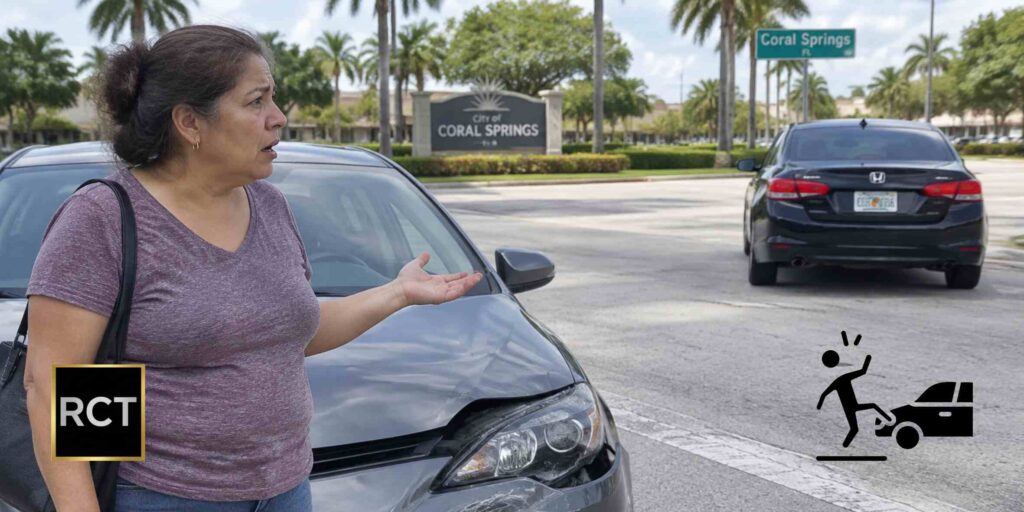
Or there’s no sound at all. You walk out of a grocery store in Coral Springs and find your car wearing a fresh wound and no explanation.
Whichever version you’re living, the next few minutes matter more than you’d think. A hit and run isn’t one problem. It starts five clocks at once: a police report, a window for camera footage, a medical deadline, an insurance notice period, and a lawsuit filing limit. Most people know about one of them. Here’s how to beat all five.
The short answer: Don’t chase the driver. Call the police, using 911 if anyone is hurt. Photograph everything before you touch the car. Then work fast on evidence, because nearby video can disappear within days. If you were inside the vehicle, see a doctor, since Florida’s PIP rules generally expect initial care within 14 days. Finally, ask your insurer which parts of your policy respond, because different coverage pays for different harm.
Should You Chase a Driver Who Hit Your Car and Drove Off?
Resist the movie scene. Even if you caught a piece of the plate, a pursuit can turn one bad moment into two collisions, and the second one is usually yours. Say the plate fragment into a voice memo, or type it into your phone, and hand the chase to the police. They have tools you don’t.
What Should You Do Right After a Hit and Run in Coral Springs?
Call the police before the adrenaline fades
If anyone suffers an injury, the scene is dangerous, or your car is blocking traffic, call 911. Otherwise, Coral Springs Police take non-emergency reports at 954-344-1800. A crash just outside city limits may belong to a different agency, and dispatch will tell you which one. Our guide on who to call after a car accident in Coral Springs has the rest of the phone list.
“It’s only a dent” is the most expensive sentence in this situation. Florida law requires drivers to report a crash when it involves injury, death, or apparent damage of $500 or more, and a bumper repair clears that bar quickly.. Hit and runs are also among the crashes where an officer is expected to write the report, so a do-it-yourself online form isn’t the right route. The report becomes the backbone of your insurance claim. It also gives investigators a thread to pull if a camera or a witness later points to the other driver.
What Florida law required the driver to do before leaving
Under § 316.061, a driver in a crash that damages an attended vehicle or property must stop and remain at the scene while providing the required information. Driving off instead is a second-degree misdemeanor.
If the other driver hit a parked car, § 316.063 applies. The driver must make a reasonable effort to find the owner or leave a written notice with identifying information, and must notify law enforcement without unnecessary delay. In other words, a note under your wiper doesn’t finish the job. And when the crash injures someone, leaving the scene becomes a felony under § 316.027
How Do You Preserve Evidence After a Hit and Run?
You don’t have to solve the case. You only have to keep the clues from evaporating.
Start by photographing the damage before you move, wash, or repair anything. Shoot it from several distances, show where your car sat, and capture any debris or paint transfer the other vehicle left behind. If you saw the car, write down everything now, while it’s vivid: color, make, any piece of the plate, which direction it traveled, and anything oddly specific, like a dented fender or a roof rack.
Then stand where your car was, turn in a slow circle, and count the lenses. A shop awning, a gas pump canopy, a gate at an apartment entrance, a doorbell on the nearest porch: any of them may have watched the whole thing. Ask in person, and ask fast, because systems often overwrite footage within days. When you find a camera, ask the manager to save the clip, then note their name and the time you asked.
“In one Broward County hit-and-run case we handled, a [type of business, e.g., shopping plaza / gas station] camera across the street captured the collision, but its system automatically overwrote recordings every [number, e.g., 48 / 72] hours. Because the client contacted us right away and we sent a preservation request before that window closed, we secured the video showing [key detail, e.g., the impact / a partial plate / the vehicle’s path], which gave the insurer the independent corroboration it needed to honor the uninsured motorist claim.”
— Lance Rosen, Esq., Reinfeld Cabrera Tison
All of this also protects your insurance claim. If police never find the driver, some policies require physical contact with the unidentified vehicle, or independent corroboration such as a witness, before treating the crash as a covered hit and run under uninsured motorist coverage. Policy wording varies, so check yours or ask an attorney how it reads.
Keep copies of your photos, witness contacts, and the police report number in one place.
Why Do Hit and Run Injuries Need Attention Within 14 Days?
Adrenaline is an unreliable narrator. You can feel fine at the scene and wake up two days later with a stiff neck, a pounding headache, or a back that won’t cooperate.
Under Florida’s Personal Injury Protection (PIP) law, initial medical services and care generally need to happen within 14 days of the accident to qualify for PIP medical benefits. Waiting can put real money at risk. The good news is that PIP is no-fault coverage under your own policy, so you don’t have to know who hit you before you seek treatment.
What Does Insurance Cover After a Hit and Run in Florida?
A hit and run doesn’t automatically mean you’re stuck with the bill. The catch is that each type of coverage pays for a different kind of harm, and people often assume one covers everything.
| What was harmed | Coverage that may respond | Worth knowing |
| Your vehicle | Collision coverage | Your deductible and policy terms apply, even when the other driver can’t be identified |
| Your medical bills | Personal Injury Protection (PIP) | No-fault; the 14-day rule applies; subject to policy limits |
| Bodily injuries beyond PIP | Uninsured motorist (UM) coverage, § 627.727 | Optional in Florida; it does not pay for damage to your car |
Read your declarations page like a menu and see what you actually ordered. UM in particular is optional and can be rejected in writing, so don’t assume you have it.
When you report the claim, give your insurer the facts and the police report number. Skip the guessing about what happened, and don’t accept anyone’s description of your coverage until you’ve checked the policy language.
What Deadlines Apply After a Hit and Run?
Here are the five clocks in one place:
| Clock | When it runs out | Why it matters |
| The police report | Right away | Florida expects reports for injury or $500+ in damage, and a report supports every claim that follows |
| The footage | First few days | Cameras often record over old video |
| The medical window | 14 days | Required to qualify for PIP medical benefits |
| The insurance notice | Promptly | Policies carry notice requirements, and unidentified-driver claims lean on prompt reporting |
| The lawsuit limit | Two years | Florida cut the general negligence deadline from four years to two for crashes on or after March 24, 2023 |
Claims under your own policy can follow different deadlines and notice rules, which is one more reason to ask early. And if the other driver turns up months later, the lawsuit clock has been running the whole time.
When Should You Talk to a Broward County Car Accident Attorney?
A hit and run can leave you juggling an unidentified driver, an insurer, and injuries you never planned on. Figuring out who might owe you what gets tangled quickly.
An attorney can review your evidence, read your policy, and explain what options remain if the driver is never found. If investigators identify the person later, that can open another path to compensation.
At Reinfeld Cabrera Tison we help injured people understand their options after serious vehicle accidents in Coral Springs and throughout Broward County. You can talk through what happened with our team before deciding how to proceed. For the broader scene checklist, see what to do after a car accident in Coral Springs.
Tel: 954-866-HURT
(954-866-4878)
Fax: 954-334-1526
Hit and Run cases in Broward County FAQs
What if the driver who hit me is never found?
You may still have options. Collision coverage may pay for your vehicle repairs, PIP may cover your medical bills, and uninsured motorist coverage may apply to certain bodily injury claims. What’s available depends on your policy and the facts of the crash.
Is a hit and run a crime in Florida?
Yes. Leaving a crash that damaged only an attended vehicle or property is generally a second-degree misdemeanor under § 316.061, and the unattended-vehicle version under § 316.063 is a misdemeanor too. Leaving a crash involving injury or death can carry felony penalties under § 316.027.
Can I file a claim if I didn’t get the license plate?
Yes. A missing plate doesn’t prevent you from reporting the crash or filing an insurance claim. A police report, photographs, witness statements, and surveillance footage can still help show what happened.
Does PIP cover my injuries if the driver is never found?
Generally yes. PIP is no-fault coverage under your own policy, so it doesn’t depend on identifying the other driver. You still have to meet its requirements, including initial care within 14 days.
What if someone hit my parked car and left no note?
Report it to the police and photograph the damage. Under § 316.063, the driver was required to find you or leave identifying information and notify law enforcement, so a missing note is itself worth mentioning to the officer. Collision coverage may help with repairs.
Should I repair or wash my car before the police finish?
No. Photograph the damage and get the report on record first, because paint transfer and debris can be evidence.
Whoever Hit You May Be Gone, but the Case Isn’t Over
The driver who hit your car may be long gone. That doesn’t leave you without options. Report the crash, protect the evidence, get examined if you were hurt, and find out what your policy covers.
If you were injured in a hit and run in Coral Springs or elsewhere in Broward County, Reinfeld & Cabrera, P.A. can help you understand your legal options.
Sources: Fla. Stat. § 316.065 · New Fla. Stat. § 316.063 · FLHSMV crash reporting. Current Fla. Stat. §§ 316.061, 316.027, 627.727, 95.11