Can You Sue for Poor Road Design in Florida?
- Yes. If improper road design, broken signals, or dangerous crosswalk infrastructure caused your bike or pedestrian accident, you can bring a claim against a Florida city, county, or FDOT. These claims fall under Florida Statute § 768.28 (sovereign immunity), which caps government liability at $200,000 per person ($300,000 per incident) and requires a formal pre suit notice before filing a lawsuit. Missing these notice deadlines will permanently bar your claim.
Riding a bike down Royal Palm Boulevard or walking across University Drive shouldn’t feel like taking your life into your own hands. Yet, South Florida’s high speed corridors and outdated street layouts turn simple trips into major hazards every day.
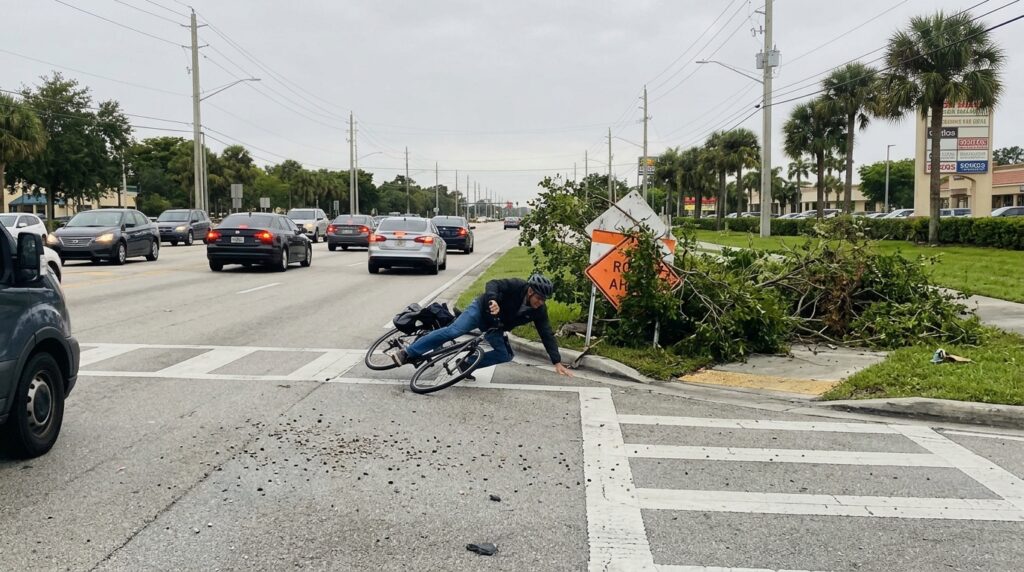
When a driver hits a cyclist or pedestrian, the insurance adjuster’s first instinct is to blame the victim. They claim they “darted out” or “weren’t paying attention.” But when you look closely at the crash site, the real issue is not that. Often missing crosswalks, overgrown medians blocking the driver’s view, or signals that don’t give people enough time to cross.
1. How Florida Right of Way Laws Apply to Cyclists & Pedestrians
Florida law gives clear protections to vulnerable road users, but insurance companies love to play with the nuance:
- Pedestrian Right of Way (Fla. Stat. § 316.130): Drivers must yield to pedestrians inside marked or unmarked crosswalks. A walk signal gives you the legal right to cross, but you cannot step off a curb directly into oncoming traffic.
- Bicycles as Vehicles (Fla. Stat. § 316.2065): In Florida, a bicycle is legally considered a vehicle. If you’re riding on the road, you have the same rights and duties as a driver (including stopping at red lights). If you’re riding on a sidewalk or inside a crosswalk, you have the legal rights of a pedestrian. But remember though you must yield to people walking and give an audible signal before passing.
2. Holding Cities and Counties Accountable for Unsafe Roads
When a dangerous road setup contributes to a crash, liability goes beyond the driver who hit you. The City of Coral Springs, Broward County, or FDOT can be held responsible if bad design or poor maintenance played a role.
Under Fla. Stat. § 768.28, you can bring a claim against a public agency for:
- Faulty Pedestrian Signals: Broken pushbuttons or walk timers so short that seniors or kids can’t reach the other side safely.
- Bad Crosswalk Placement: Putting crosswalks in driver blind spots, omitting flashing beacons (RRFBs) on multi lane roads, or leaving high traffic routes without bike lanes.
- Neglected Maintenance: Overgrown trees hiding pedestrian warning signs, dead streetlight bulbs, or crosswalk paint so faded it’s practically invisible at night.
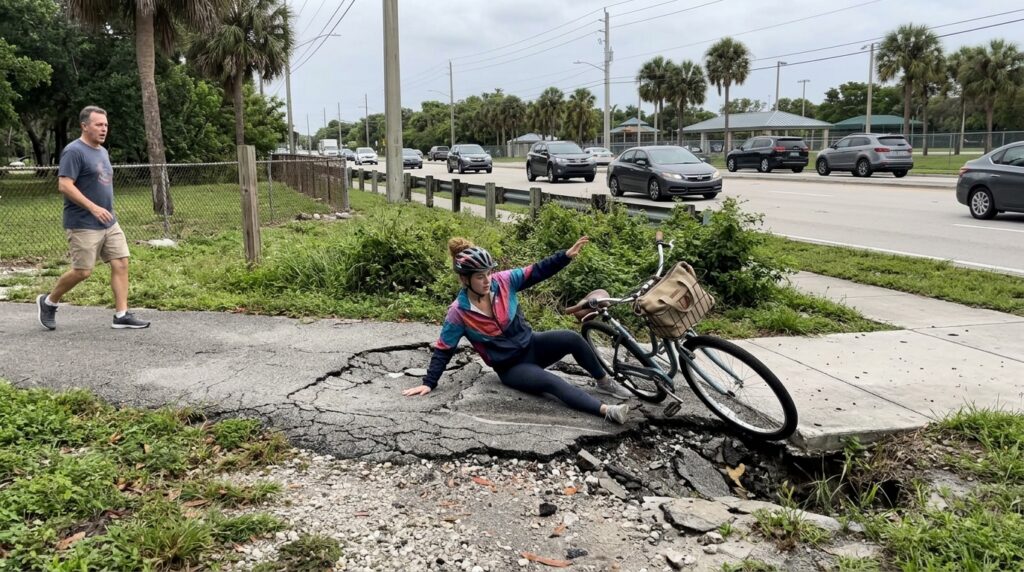
- Road & Sidewalk Hazards: Potholes, buckled concrete from tree roots on bike paths, or steep pavement drop offs that throw cyclists off balance.
3. The Reality of Florida’s Sovereign Immunity Rules (Fla. Stat. § 768.28)
Suing a government agency isn’t like filing a standard car accident claim. Florida’s sovereign immunity laws protect public entities, but the state waives some of that protection for personal injury claims—under strict conditions:
- Hard Financial Caps: Compensation from a government entity is capped at $200,000 per person and $300,000 per accident. To recover anything above that cap, your attorney must secure a “claims bill” passed directly by the Florida Legislature.
- Mandatory Pre Suit Notice: You cannot just file a lawsuit. You must serve a detailed written notice of the claim to the involved agency and the Florida Department of Financial Services (DFS), then wait through a mandatory 6 month investigation period.
- Strict Timelines: Government claims are subject to a 3 year statute of limitations (shorter for wrongful death), and the required pre suit notice must be filed well in advance.
4. Real World Scenarios: Uncovering Unsafe Road Infrastructure
Winning these cases comes down to proving that local officials knew—or should have known—about the danger and did nothing:
Case Study 1: Overgrown Medians and Hidden Crosswalks
- The Crash: A driver turning at a Coral Springs intersection struck a cyclist legally crossing inside a marked crosswalk. The driver insisted they couldn’t see the cyclist because of bushy median landscaping.
- The Evidence: Subpoenaed city records revealed that local residents had submitted multiple complaints about the overgrown plants blocking intersection sightlines over four months prior to the crash.
- The Result: Proving prior notice established that the municipality neglected basic road maintenance, establishing liability for the crash.
Case Study 2: Pedestrian “Jaywalking” vs. Missing Crosswalks
- The Crash: A pedestrian was struck trying to cross a busy 6 lane road nowhere near an intersection. The defense argued the victim was solely at fault for jaywalking.
- The Evidence: Traffic engineering experts demonstrated that signalized crosswalks were spaced over half a mile apart in a dense residential zone, creating an unsafe environment for transit riders.
- The Result: The engineering proof showed the road was fundamentally flawed for pedestrians, shifting comparative fault off the victim and onto the road designers.
5. Five Things to Do Right After an Intersection Accident
Physical evidence at a crash scene can change overnight once city maintenance crews arrive. If you are physically able, take these steps immediately:
- Photograph the Infrastructure: Take close ups and wide shots of faded paint, broken signals, blocked signs, potholes, or burnt out streetlights.
- Capture Driver & Cyclist Sightlines: Take photos showing what the driver saw coming up to the intersection, as well as your own line of sight.
- Talk to Witnesses & Neighbors: Get contact information for bystanders and residents nearby who can speak to how notoriously dangerous that specific crossing is.
- Secure Camera Footage: Ask nearby businesses for security camera footage or check for traffic cameras before recordings get automatically overwritten.
- Send Evidence Preservation Letters: Have a lawyer send formal spoliation letters to local agencies to lock down signal timing logs, work orders, and prior crash reports for that location.
Frequently Asked Questions
Q: What if I was riding my bike on the sidewalk or going the wrong way when I was hit?
A: You can still recover compensation. Under Florida’s modified comparative negligence rules, as long as you are 50% or less at fault, you can collect damages. The court will simply balance your actions against the driver’s failure to look before turning.
Q: Do I have the right of way if there weren’t any painted crosswalk lines?
A: Yes. Florida law recognizes “unmarked crosswalks” at virtually every standard intersection where sidewalks meet the street. Drivers are still legally required to exercise caution and yield to people crossing there.
Q: What if a private construction crew caused the road hazard instead of the city?
A: If a private road contractor left unlit detour signs, debris, or dangerous lane drop offs, the $200,000 sovereign immunity cap does not apply to them. You can pursue a claim directly against their commercial liability policy for full damages.
Q: What if I was hit by a city bus or government vehicle?
A: These cases fall squarely under Fla. Stat. § 768.28. The $200,000/$300,000 government caps apply, and you must complete the formal pre suit notice process before taking the city or county to court.
Q: How long do I have to file a claim against Coral Springs or Broward County?
A: You generally have three years from the date of the crash, but because of the mandatory six month administrative review period, you need to start the pre suit process as soon as possible.
Hit at a Coral Springs Intersection or Crosswalk?
If you were injured while walking or riding your bike in Coral Springs or Broward County, don’t let insurance adjusters shift the blame onto you. At Reinfeld Cabrera Tison, we dig into traffic camera logs, road maintenance records, and crash data to find out what really happened.
- Give Us a Call: Dial 954-866-4878 to talk through your case with our team.
- Reach Out Online: Contact us through our website to set up a free, confidential case review.