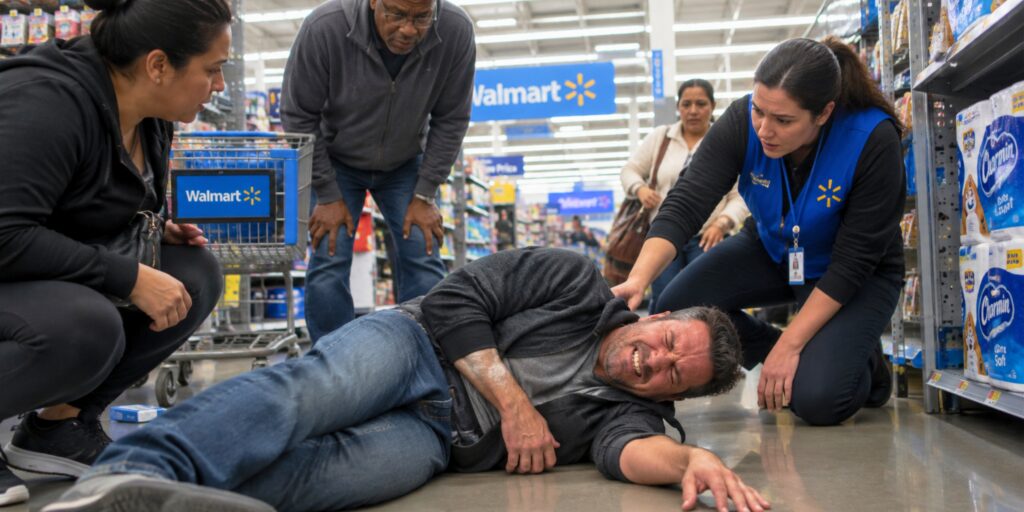
Can You Sue a Major Retailer for a Slip and Fall in Florida?
- Yes, but winning requires clearing a specific legal hurdle under Florida Statute § 768.0755. Simply taking an unexpected slide across a slick grocery store tile does not automatically make the company financially responsible. Instead, Florida law places the burden of proof squarely on you to demonstrate that the business possessed actual or constructive knowledge of the dangerous condition and failed to take action.
- Actual knowledge means a store employee directly created the spill or was warned about it by another customer. Constructive knowledge is established through circumstantial evidence. You prove constructive notice by showing the liquid sat on the floor long enough that attentive staff performing routine sweeps should have spotted it.
- You can also prove constructive notice by showing that chronic display leaks or recurring condensation problems made the hazard completely foreseeable to store management.
A routine trip to Publix, Target, or Walmart on University Drive should involve crossing off a grocery list, not assessing structural damage to your lower back. Yet, polished retail floors and uncleaned spills across Coral Springs transform daily errands into high stakes obstacle courses.
Corporate risk managers and insurance adjusters move remarkably fast after a customer falls. Their default setting is to blame your footwear or claim you should have seen the invisible puddle of detergent. Securing fair compensation requires showing that store staff dropped the ball long before you hit the deck.
1. Florida Premises Liability Law for Retail Spills (Fla. Stat. § 768.0755)
Florida premises liability statutes set clear, strict ground rules for shoppers injured by hazardous spills:
- Constructive Knowledge Requirement: You must prove the store had legal notice of any transitory foreign substance. This includes spilled sports drinks, melting bags of ice, leaking display coolers, and rainwater tracked inside.
- Proving Constructive Knowledge: Evidence must show the hazard sat long enough for attentive staff to discover and clean it. Alternatively, proving that the store suffers from chronic, recurring leaks establishes that the hazard was entirely foreseeable.
- Actual Knowledge: Liability applies directly when store workers cause the mess themselves. It also applies if another shopper warned staff about the puddle minutes before you encountered it.
2. High Risk Areas and Localized Hazards in Coral Springs Supermarkets
Retail falls rarely happen in quiet, dry corners of the store. They occur in predictable splash zones where liquids and heavy foot traffic create constant hazards.
Key Injury Zones in Local Retail Locations
- Produce Sections and Misting Systems: Automated produce misters keep lettuce crisp while turning smooth floor tiles into skating rinks. Fallen produce leaves also create slick patches when walked on by shoppers.
- Refrigerated Aisles and Dairy Coolers: Open freezer cases frequently suffer from clogged condensate drains. These mechanical failures release steady streams of clear, hard to spot water directly across main shopping aisles.
- Checkout Lanes and Self Checkout Hubs: High traffic registers are hotbeds for dropped glass containers and leaking laundry detergent. Busy clerks focused on scanning items often miss fresh spills pooling on the floor right beside them.
- Store Entrances During Heavy Rain: South Florida afternoon downpours guarantee endless rainwater tracked through main glass doors. Stores face direct liability if they fail to lay down long rubber mats or leave saturated rugs in place.
- Flooring Transitions and Entry Ramp Slopes: Buckled transition strips between carpet and tile catch boot heels easily. Loose entrance matting on inclined ramps creates sudden, unexpected loss of traction.
3. How Retail Defense Teams Fight Slip and Fall Claims
Big box retail chains deploy a familiar playbook to dodge financial responsibility after a fall:
- The Open and Obvious Defense: Insurance adjusters routinely claim the puddle was glaringly obvious and that you simply were not watching your step.
- The Just Happened Argument: Defense attorneys claim another shopper dropped the liquid mere seconds before your fall, leaving staff zero time to react.
- Comparative Fault Claims: Florida uses modified comparative negligence rules to reduce payouts. Corporate adjusters love blaming smart phones, flip flops, or plain clumsiness for your sudden impact with the floor.
- Withholding Video Footage: Stores almost never share internal security camera footage out of the goodness of their hearts. Security systems routinely overwrite unpreserved video after a set number of days.
4. Real World Scenarios: Establishing Store Negligence
Winning a premises liability claim comes down to securing hard evidence before store managers clean up the evidence trail:
Case Study 1: Melted Ice Hazards Near Checkout Lanes
- The Incident: A customer suffered a severe knee injury after slipping on melted ice near a register. Store management swore staff had zero knowledge of any water on the floor.
- The Evidence: Subpoenaed security video showed the ice melting on the tile for 45 full minutes. Four different employees walked past the puddle without setting down a yellow caution cone or grabbing a mop.
- The Outcome: Proving that staff repeatedly ignored the hazard established constructive knowledge under state law. The insurance carrier settled the claim before trial.
“Corporate defense teams love claiming that a spill was an unavoidable accident that happened seconds before our client fell,” says partner attorney Devin Tison.
“In one of our major retail cases, store management swore up and down they had zero knowledge of a water hazard near the registers. We subpoenaed forty five minutes of continuous security video and proved four separate employees walked right past that melting ice without lifting a finger. When you expose that gap between store policy and real world employee actions, their defense completely collapses.”
Case Study 2: Chronic Produce Cooler Leaks
- The Incident: A shopper took a spill in front of an open vegetable cooler. The retailer claimed the leak was a sudden, unpredictable equipment malfunction.
- The Evidence: Internal maintenance logs revealed the cooler had a three month history of recurring drain clogs. Staff kept wiping the floor rather than repairing the actual refrigeration unit.
- The Outcome: Demonstrating a pattern of unaddressed mechanical failures established clear foreseeability and dismantled the store’s primary defense.
5. Critical Steps to Take After a Retail Slip and Fall
Taking immediate, methodical steps right after a fall protects both your health and your legal claim:
- Report the Incident to Store Management: Insist that the store manager fill out an official written incident report. Get a copy of the report or at least the official confirmation number before leaving.
- Photograph the Hazard Immediately: Capture close up photos and videos of the exact liquid, produce, or obstacle. Take wide shots showing the absence of caution signs or floor mats.
- Inspect the Liquid and Your Clothing: Check if the substance was dirty, cold, or covered in shopping cart tire tracks. Take photos of your damp or stained clothes and shoes immediately.
- Identify Store Workers and Witnesses: Collect names and phone numbers from fellow shoppers who saw you land. Note any casual comments made by store employees regarding the spill.
- Seek Medical Care and Demand Video Preservation: Get checked by a doctor right away to document your injuries. Retain an attorney to send a formal Spoliation Letter demanding the store lock down all relevant CCTV footage.

Frequently Asked Questions
Q: Can I still recover compensation if a wet floor sign was sitting nearby?
- A: Yes. Yellow caution signs are not magical shields against liability. Stores remain responsible if employees place signs far from the actual spill or leave known hazards uncleaned for hours.
Q: What if I slipped on rainwater near the front entrance?
- A: Business owners must actively manage rainwater tracked inside during Florida storms. Failing to lay down adequate floor mats or mop standing water creates clear liability for resulting falls.
Q: How long do I have to file a slip and fall lawsuit in Florida?
- A: Florida law grants a two year window from the date of the fall to file a personal injury lawsuit. Missing this deadline forfeits your legal right to demand compensation in court.
Q: Should I give a recorded statement to the store adjuster?
- A: No. You have no legal obligation to record statements for corporate insurance adjusters. Adjusters use these recorded interviews to trick you into statements that minimize store fault.
Q: What if the retailer refuses to hand over security camera video?
- A: Stores rarely share internal video files voluntarily. Your attorney must serve a formal legal demand ordering the business to preserve all security tapes, inspection logs, and shift rosters.
Injured in a Coral Springs Supermarket or Retail Store?
If an uncleaned spill or dangerous store aisle turned your shopping trip into an emergency room visit, do not let corporate claims representatives sweep your case under the rug. At Reinfeld Cabrera Tison, we hold negligent property owners accountable and secure the video evidence needed to win.
- Give Us a Call: Dial 954-866-4878 to talk through your case with our legal team.
- Reach Out Online: Contact us through our website to set up a free case review.