When you step onto a business, commercial, or private property, you have a reasonable expectation of safety. Unfortunately, property owners frequently neglect maintenance, ignore dangerous conditions, or fail to provide adequate security—resulting in severe, life-altering injuries.
Understanding how premises liability in florida operates is critical if you have been injured on commercial or private property. Under state statutes, the burden of proof rests entirely on the injured victim to demonstrate that the property owner failed to maintain safe conditions or provide adequate warnings.
If you or a loved one suffered an injury due to unsafe property conditions, securing representation from an experienced personal injury team is essential. At Reinfeld Cabrera Tison, our Coral Springs injury attorneys specialize in cases involving premises liability in florida, protecting victims against aggressive corporate insurers and building airtight claims across Broward County and South Florida.
Key Takeaways: Florida Property Safety Standards
- Notice Requirement (Fla. Stat. § 768.0755): In slip and fall cases involving foreign substances on business property, you must prove the owner had actual or constructive knowledge of the hazard.
- 51% Comparative Fault Bar (Fla. Stat. § 768.81): Florida follows a modified comparative fault system. If an insurer proves you were more than 50% at fault for your injury, you are completely barred from recovering compensation.
- 2-Year Statute of Limitations: Florida’s personal injury laws enforce a strict deadline of two (2) years from the date of the incident to file a lawsuit.
Key Laws Governing Premises Liability in Florida
When pursuing a claim for premises liability in florida, victims must overcome strict evidentiary hurdles established by state statutes and recent civil justice reforms.
1. Constructive Knowledge in Slip and Fall Accidents
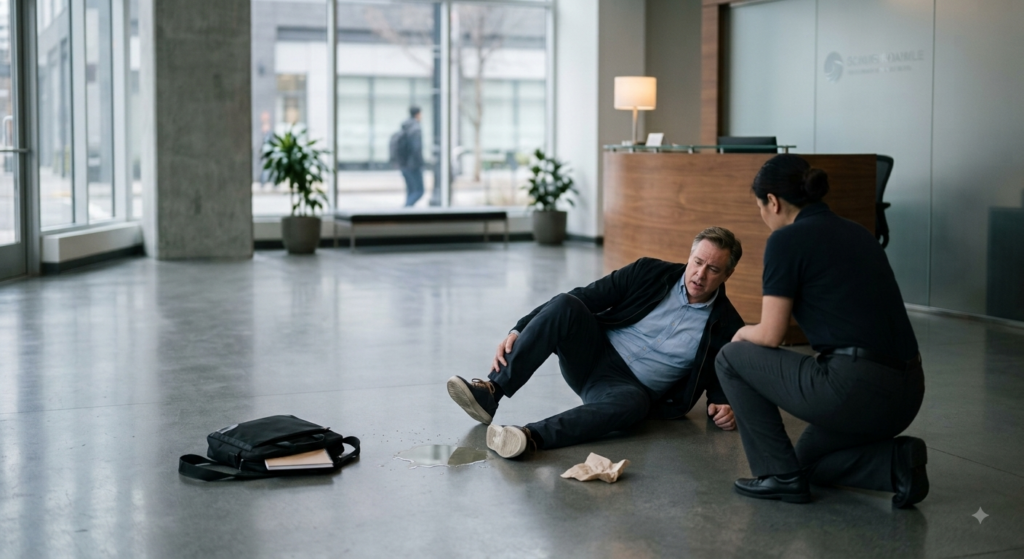
Under Florida Statute § 768.0755, if you slip and fall on a foreign substance at a business establishment, you must prove that the business had actual or constructive knowledge of the dangerous condition and should have taken action to remedy it. Constructive knowledge can be proven by showing:
- The dangerous condition existed for such a length of time that the owner exercising ordinary care should have known of it.
- The condition occurred with regularity and was therefore foreseeable.
2. The 51% Fault Threshold
Under Florida’s modified comparative fault law (Fla. Stat. § 768.81), financial recovery is tied directly to responsibility. While you can recover partial damages if you are 50% or less at fault, being assigned 51% or more of the blame prevents you from collecting any compensation. Defense lawyers frequently argue that victims were distracted or wearing improper footwear to push them over this threshold.
3. Multifamily Property Security Presumptions
Under Florida Statute § 768.0706, owners of multifamily residential properties (such as apartment complexes) who implement specific security measures—including entry/exit camera surveillance, deadbolts, illuminated walkways, and employee crime deterrence training—gain a legal presumption against negligent security liability. Defeating this presumption requires sophisticated legal discovery and expert testimony.
Duty of Care: Visitor Classifications in Florida
A property owner’s legal obligation under Florida law depends on the visitor’s legal status at the time of the incident:
1. Invitees (Highest Duty of Care)
Invitees are individuals invited onto commercial or public premises for business or public purposes (e.g., retail shoppers, restaurant patrons, hotel guests). Owners owe invitees the highest duty of care:
- Maintaining premises in a reasonably safe condition.
- Conducting regular inspections to discover hidden hazards.
- Repairing or warning of dangerous conditions.
2. Licensees
Licensees enter property with permission for their own convenience or social purposes (e.g., social houseguests, sales representatives). Owners must maintain safe conditions and warn of known concealed hazards but generally owe no duty to conduct active inspections.
3. Trespassers
Trespassers enter property without permission. Owners owe no duty of care other than refraining from causing intentional harm, with key exceptions for child trespassers under the Attractive Nuisance Doctrine (e.g., unfenced swimming pools).
Why Choose Reinfeld Cabrera Tison for Your Claim
Filing a claim against a major commercial establishment, resort, apartment complex, or insurance company is rarely straightforward. Insurance adjusters routinely attempt to shift blame onto victims to minimize payouts.
At Reinfeld Cabrera Tison, we equalize the playing field. Here is how our firm protects your rights and maximizes your financial settlement:
- Rapid Evidence Preservation: We act immediately to issue spoliation letters, securing critical security camera footage, maintenance logs, and incident reports before they are erased or altered.
- Proving Constructive Knowledge: We utilize forensic engineers, safety inspectors, and eyewitness statements to prove how long a dangerous condition existed.
- Defending Against Comparative Fault: We gather objective evidence to counter claims of victim negligence, keeping your fault score at 0% or well below the 51% bar.
- No Fee Unless We Win: We handle all personal injury claims on a contingency fee basis. You pay zero out-of-pocket legal fees unless we successfully recover money for you.
Types of Cases We Handle Across South Florida
The legal team at Reinfeld Cabrera Tison represents clients across Broward County and the surrounding regions in a wide spectrum of property injury claims:
- Slip, Trip, and Fall Accidents: Liquid spills, wet supermarket floors, unmaintained walkways, torn carpeting, and uneven concrete.
- Negligent Security Claims: Violent assaults, robberies, or physical attacks at apartment buildings, parking garages, or night spots due to broken gate locks, lack of security guards, or inadequate lighting.
- Structural & Maintenance Defects: Broken stair handrails, collapsed balconies, malfunctioning elevators, and falling store displays.
- Swimming Pool Accidents: Drowning incidents, missing safety gates, slippery decks, and chemical burns at private or commercial pools.
- Dog Bites & Animal Attacks: Florida enforces strict liability on dog owners for injuries caused by their pets in public places or lawfully on private property.
Recoverable Compensation in Premises Liability Claims
Severe property accidents often result in traumatic brain injuries (TBI), spinal fractures, torn ligaments, or permanent disfigurement. Our attorneys fight to recover full compensation across two primary damage categories:
| Category | Recoverable Compensation Includes |
| Economic Damages | Emergency ER care, surgical costs, physical therapy, prescription medication, lost wages, and loss of future earning capacity. |
| Non-Economic Damages | Physical pain and suffering, emotional distress, permanent disfigurement or scarring, loss of enjoyment of life, and loss of consortium. |
Critical Steps to Take After an Injury on Someone Else’s Property
Taking immediate action after a property injury safeguards your health and strengthens your legal position:
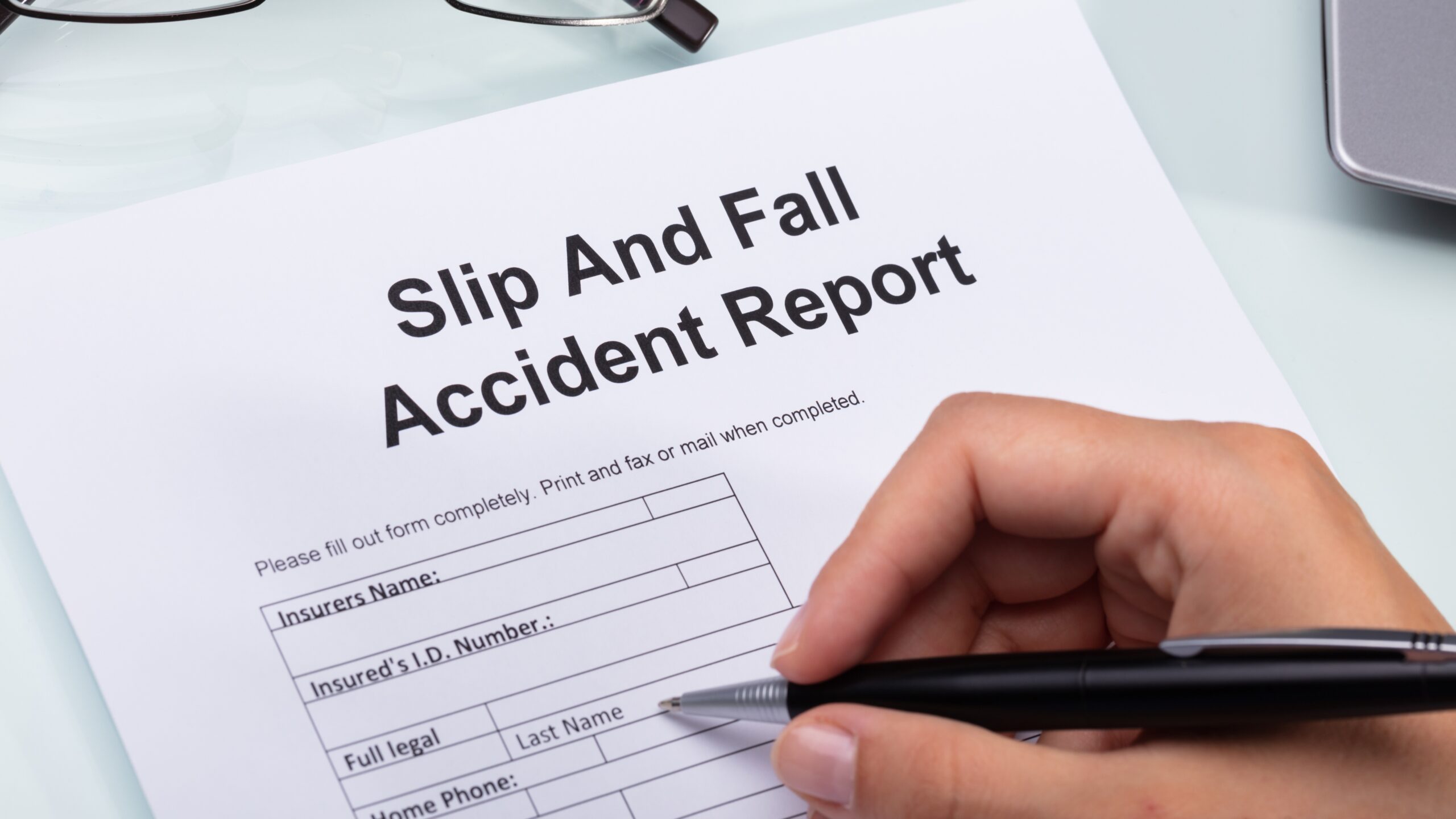
- Report the Incident Immediately: Inform the property manager, store supervisor, or owner, and demand an official written incident report. Obtain a copy or report reference number.
- Document the Scene: Take photos and videos of the exact hazard (water puddle, torn mat, lack of lighting, broken door) from multiple angles before it gets cleaned or repaired.
- Identify Witnesses: Collect names and phone numbers from anyone who saw the incident occur or noticed the unsafe condition prior to your injury.
- Seek Immediate Medical Care: Go to an urgent care or emergency room right away. Medical records establish a direct link between the accident and your injuries.
- Refuse Recorded Statements: Do not provide recorded statements to the property owner’s insurance adjuster until you consult an attorney.
- Contact Reinfeld Cabrera Tison: Call our Coral Springs office promptly so our legal team can preserve time-sensitive surveillance and inspection evidence.
Frequently Asked Questions (FAQ)
What is “constructive knowledge” in a Florida slip and fall case?
Under Florida Statute § 768.0755, constructive knowledge means proving the property owner should have known about a hazard even if they claim they didn’t. This is established if the hazard existed long enough that a reasonable owner exercising ordinary care would have discovered it.
How does Florida’s 51% fault rule affect my claim?
Under Florida’s modified comparative fault law, if a jury or insurance adjuster determines you were partially at fault (e.g., looking at your phone while walking), your compensation is reduced by your fault percentage. However, if you are found to be 51% or more at fault, you are barred from receiving any payout.
What is the deadline to file a premises liability lawsuit in Florida?
Under Florida Statute § 95.11, you have two (2) years from the date of the injury to file a personal injury lawsuit. Missing this deadline permanently forfeits your right to seek financial recovery.
Can I sue an apartment complex for negligent security if I was a victim of a crime?
Yes. If an apartment complex or commercial venue failed to provide reasonable security measures—such as working gates, adequate lighting, or functioning locks—despite foreseeable criminal activity in the area, you may hold the property owner accountable through a negligent security claim.
Speak with an Experienced Florida Injury Lawyer Today
Do not let a negligent property owner or their insurance company push you into accepting a low settlement. If you need help with premises liability in florida, put the experienced legal team at Reinfeld Cabrera Tison to work on your case.
- Firm: Reinfeld Cabrera Tison — Personal Injury Attorneys
- Primary Office: Coral Springs, FL (Serving all of Broward County & South Florida)
- Phone: (954) 371-0499 | (954) 866-4878
- Consultation: Free, Confidential, No-Obligation Case Evaluation